品牌設計 / 商業空間設計 / 視覺設計 / 品牌氛圍營造
Branding / Commercial Space Design / Visual Design / Brand Curation
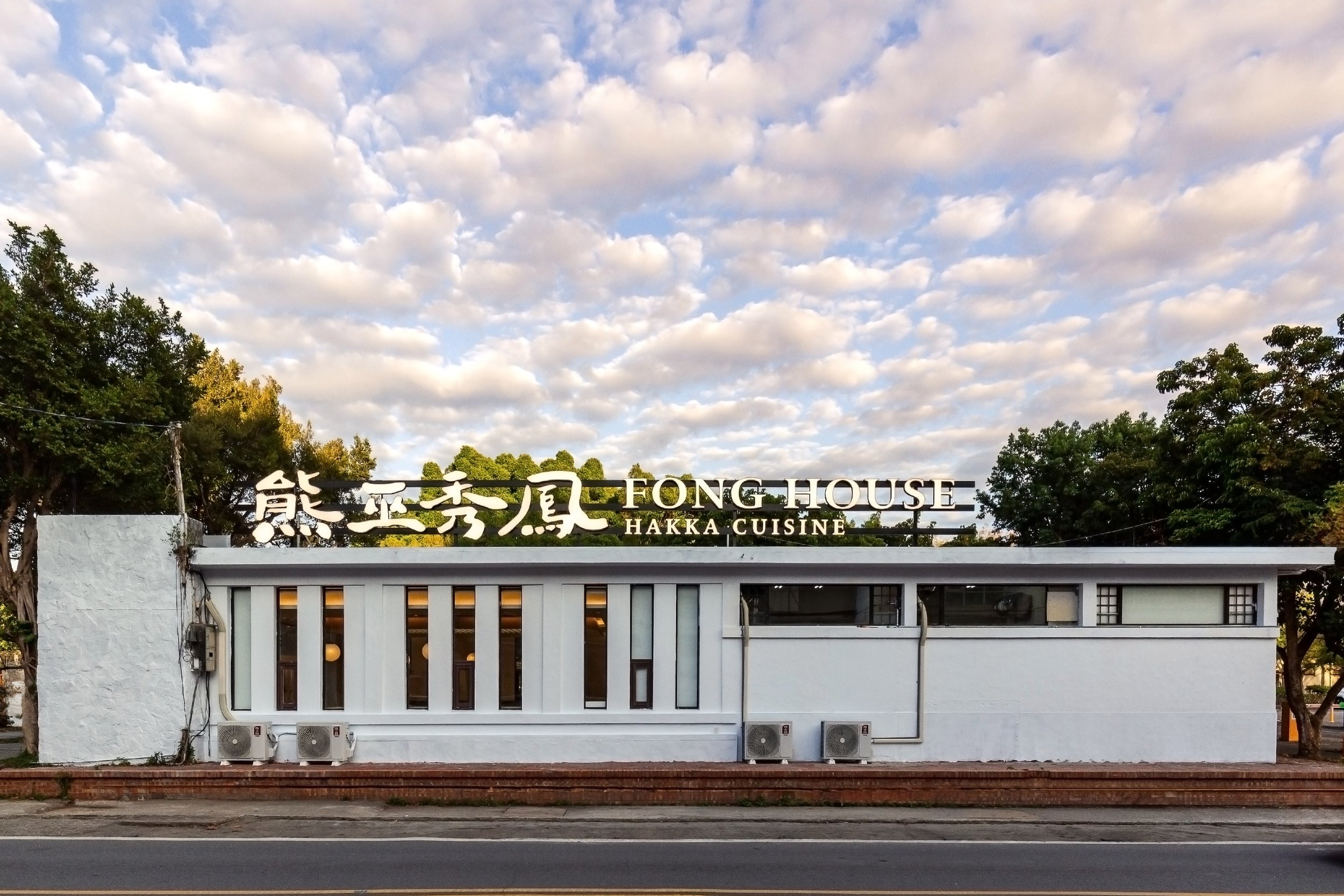
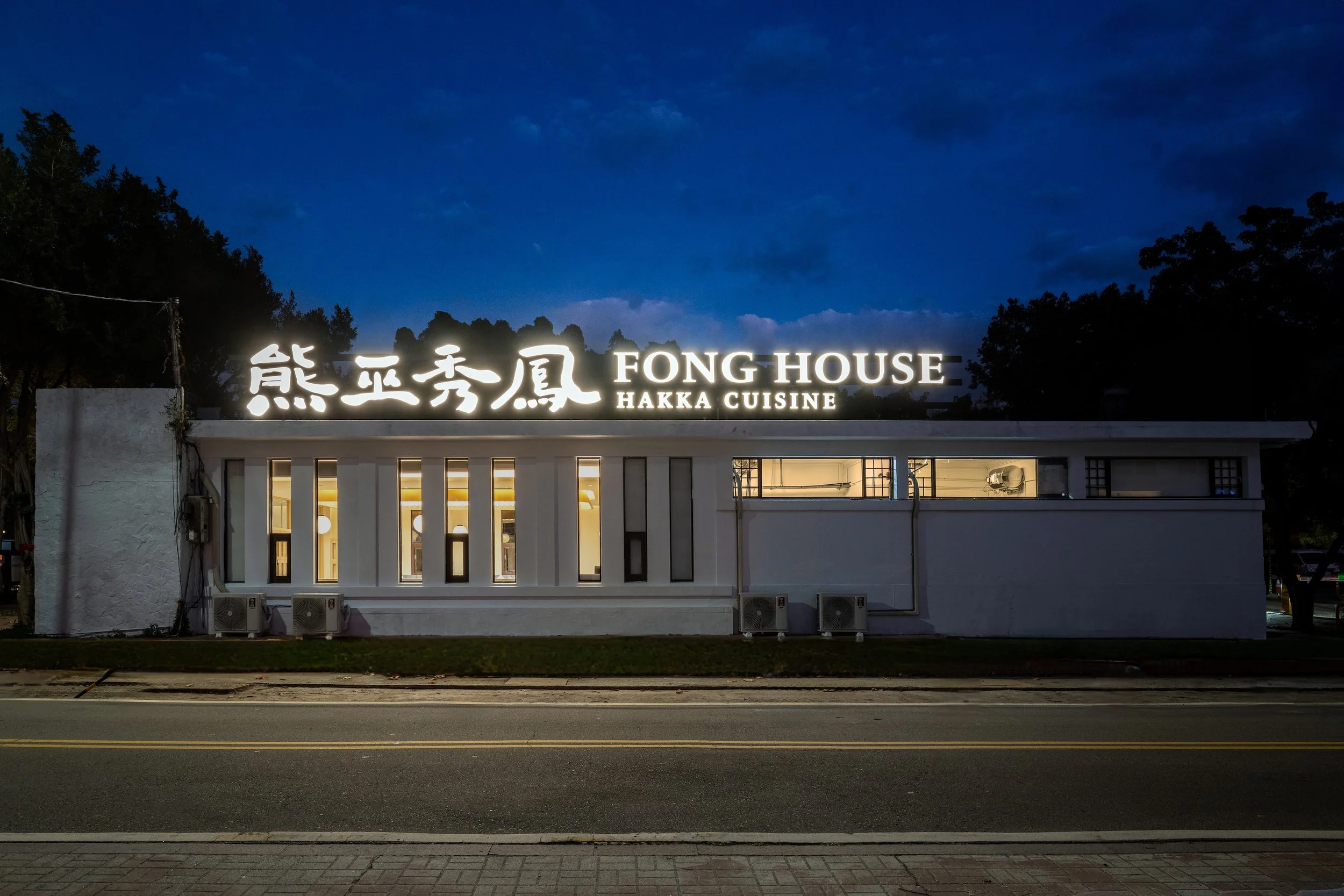
燒暖个客家味瑞
The Taste
of Hakka Warmth
創辦人的外婆 —— 熊巫秀鳳,一位從日據時代走到今日的傳統客家女性。她象徵著家族的根、客家人的勤懇精神,以及代代相承的生活智慧。早年外婆務農,不吃牛,卻常為家人與餐廳員工準備客家料理,這份溫暖也促使原以全牛大餐為主的「牛稼莊」,逐漸將客家菜納入菜單之中,成為深具地方特色的飲食印記。
The founder’s grandmother, Hsiung Wu Hsiu Fong, is a traditional Hakka woman who lived through the Japanese colonial era and into the present day. She represents the roots of the family, the diligence of the Hakka people, and the life wisdom passed down through generations. In her early years, she worked in agriculture and did not eat beef, yet she often prepared Hakka dishes for her family and the restaurant staff. This warmth and care gradually inspired the originally all-beef restaurant, Niu Jia Zhuang, to incorporate Hakka cuisine into its menu, becoming a distinctive culinary symbol deeply rooted in the local culture.
屋下个燒暖同記憶,
世代直直延續落去个客家食雜。
The warmth of home and memories,
carrying Hakka flavors through generations.
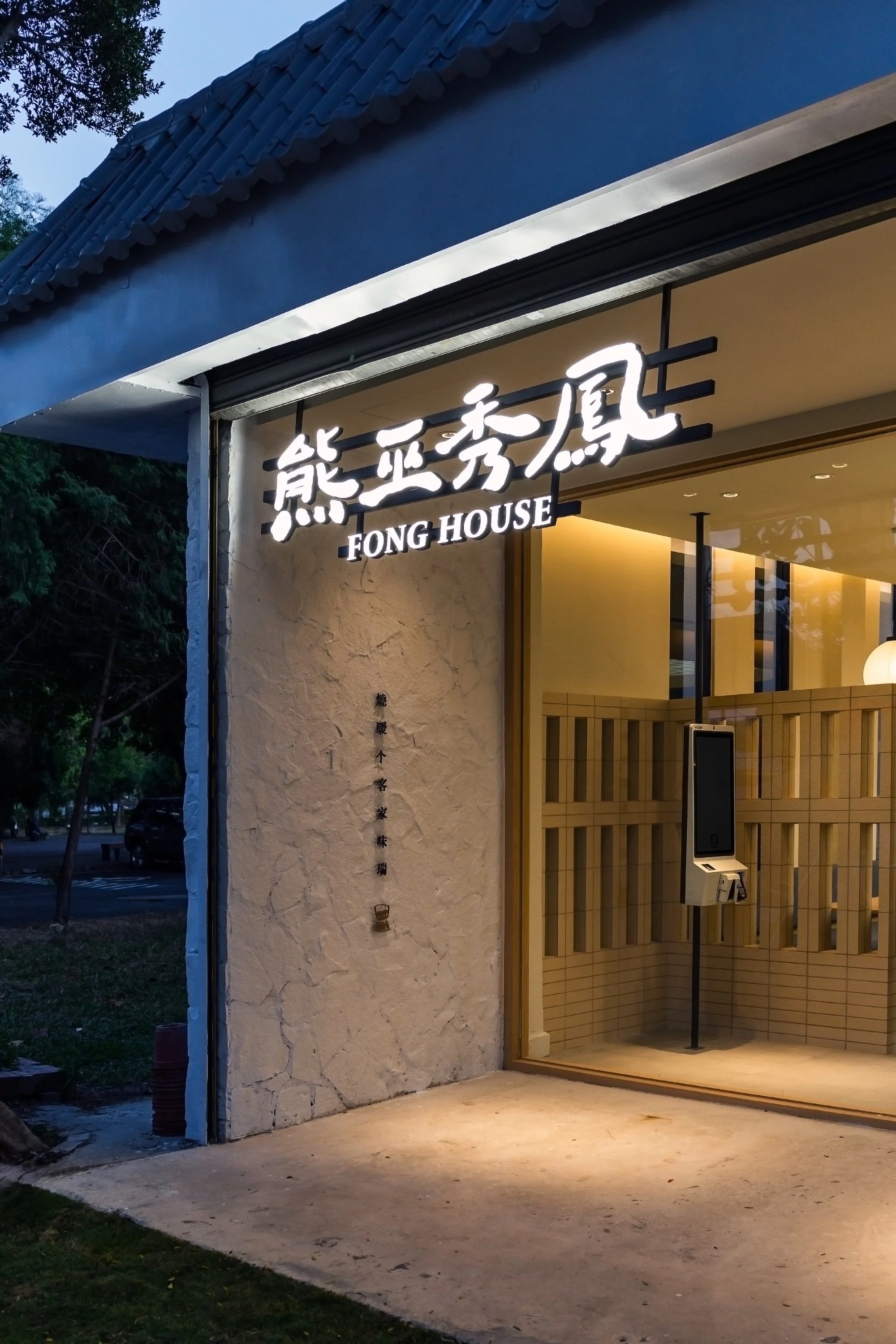
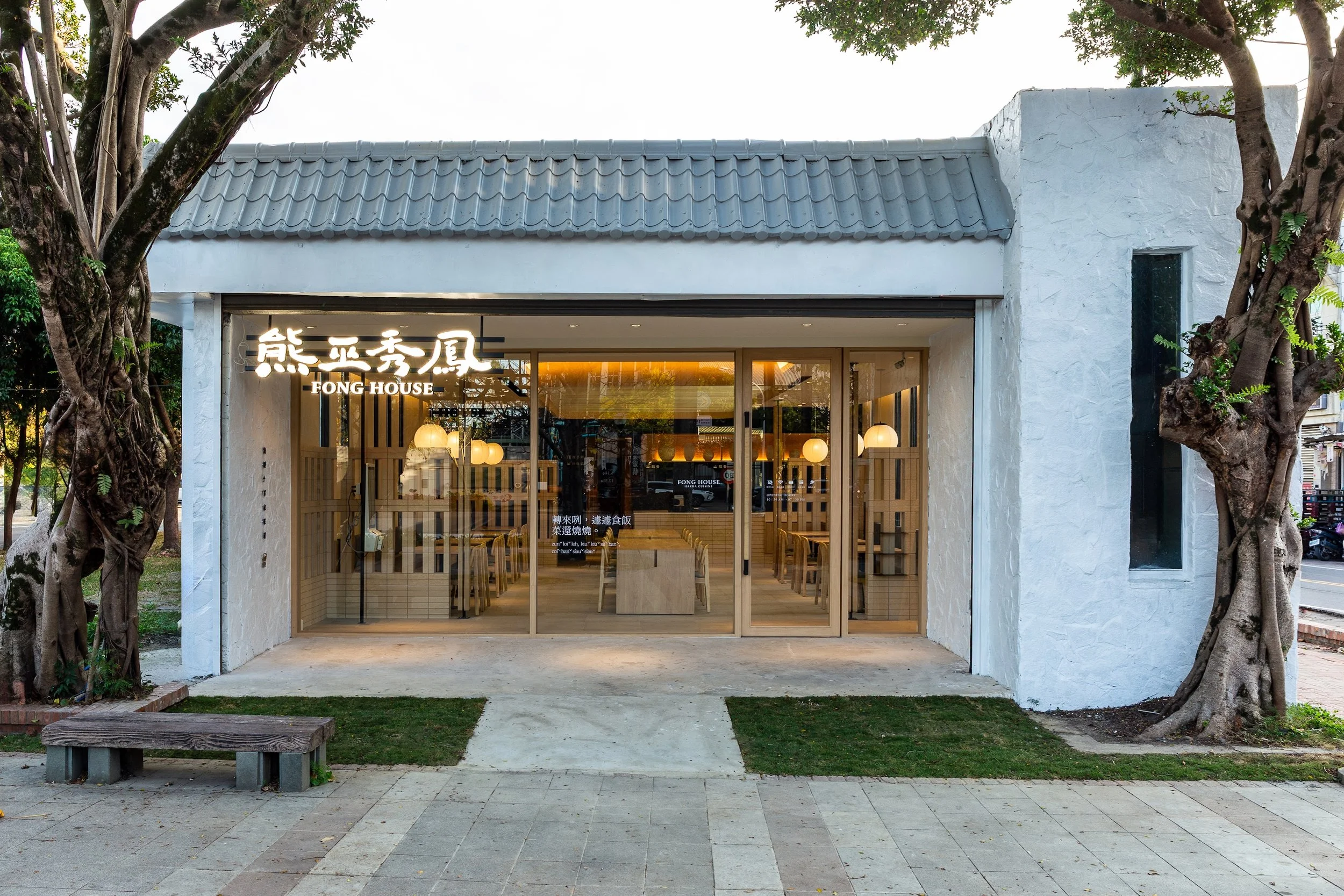
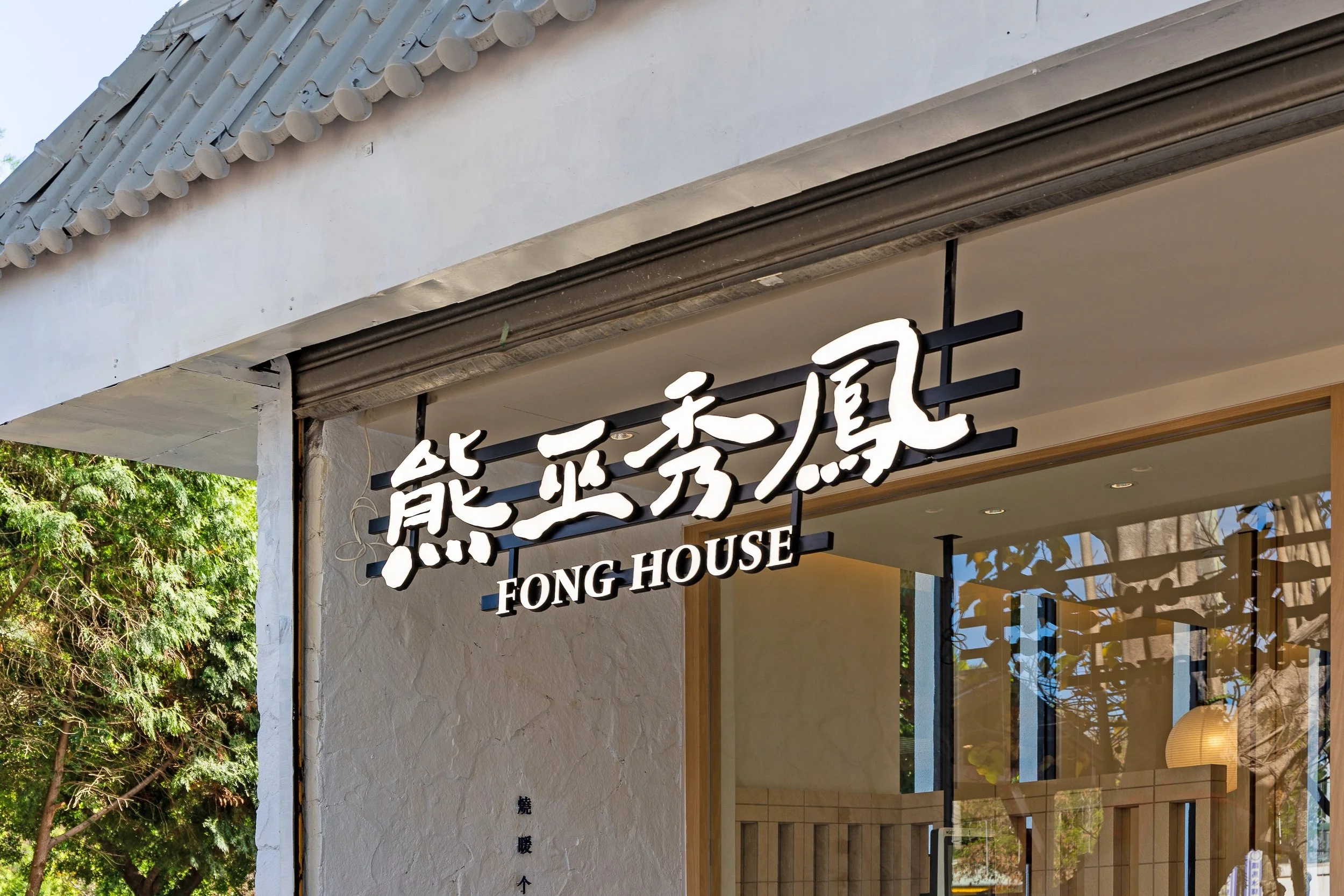
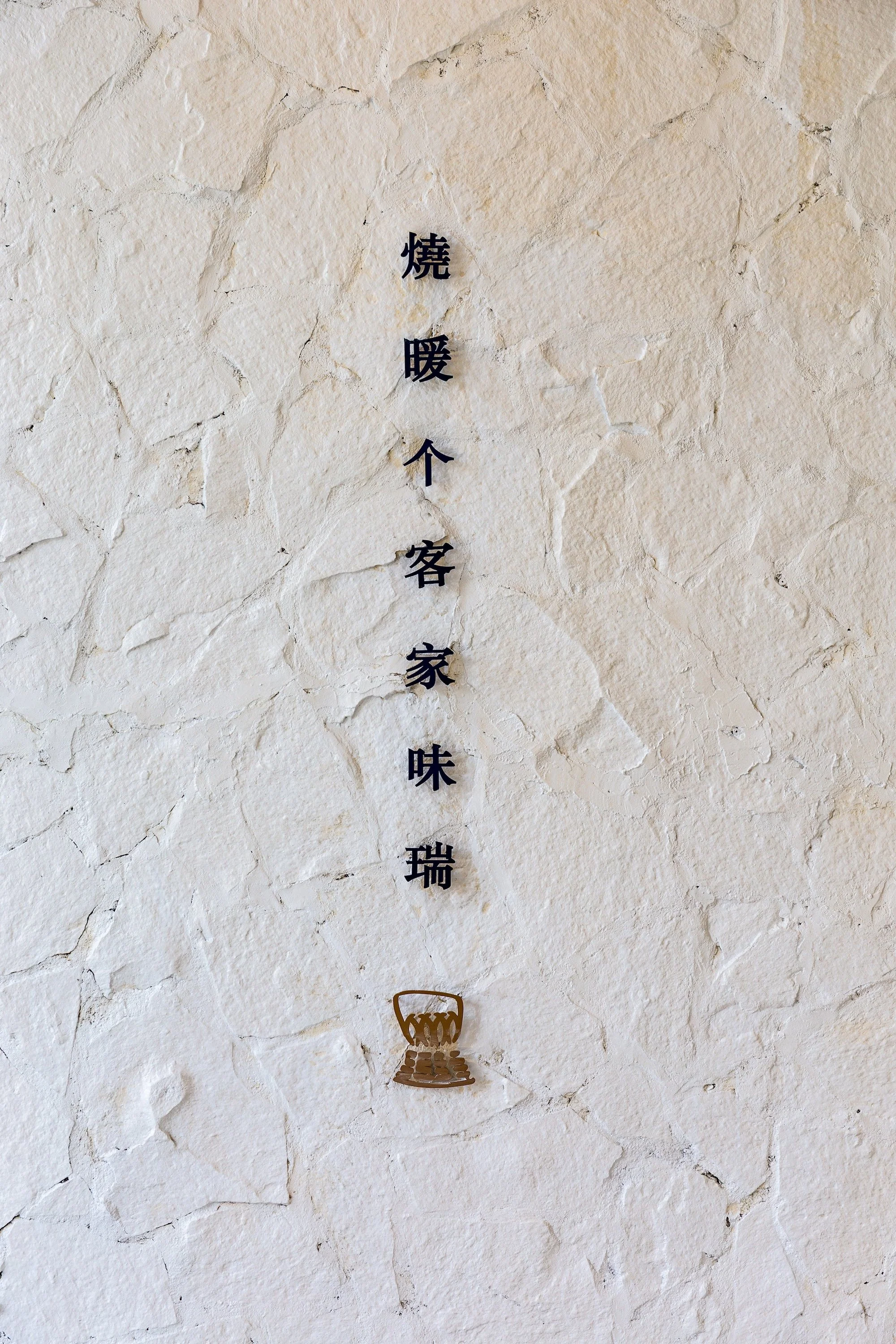
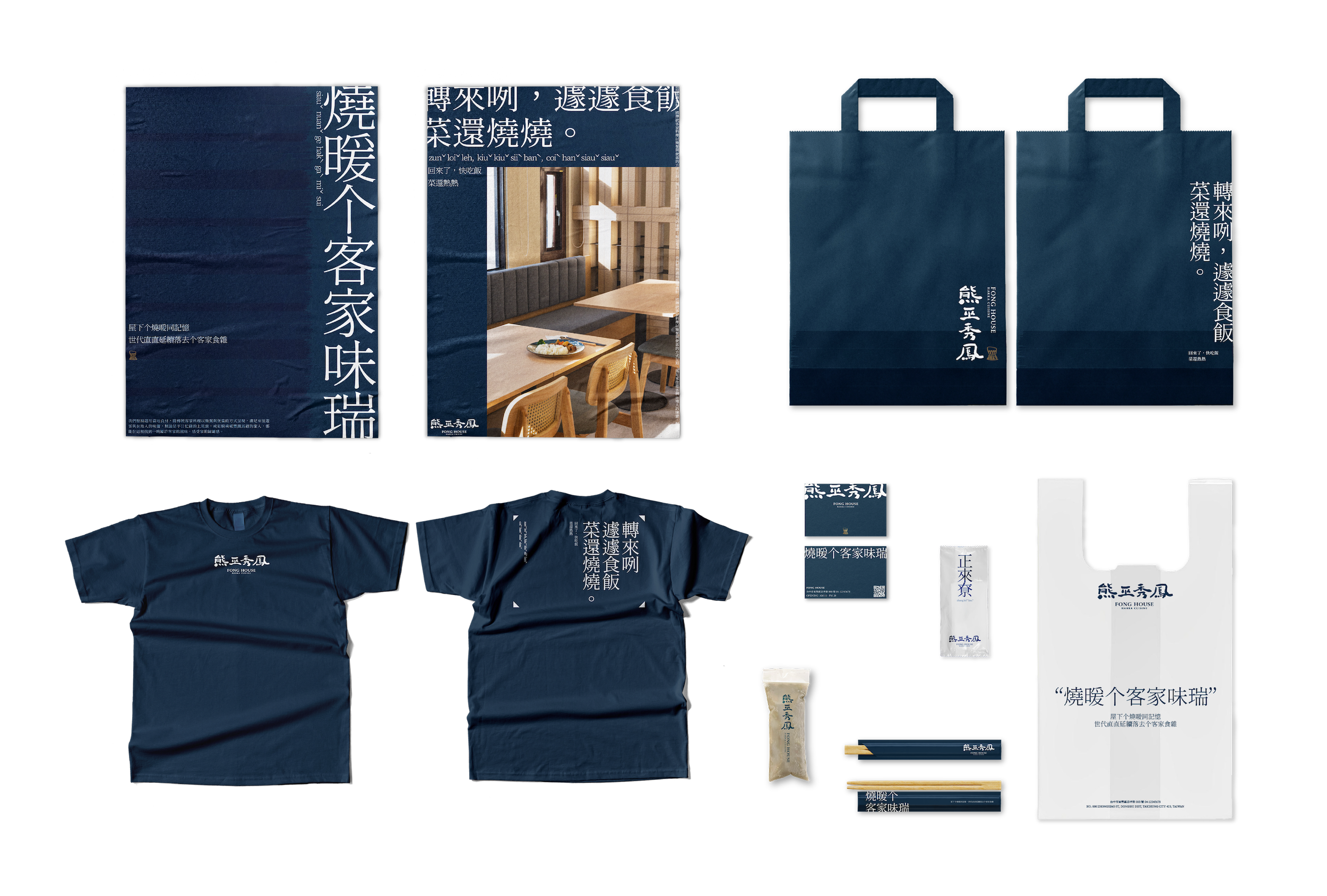
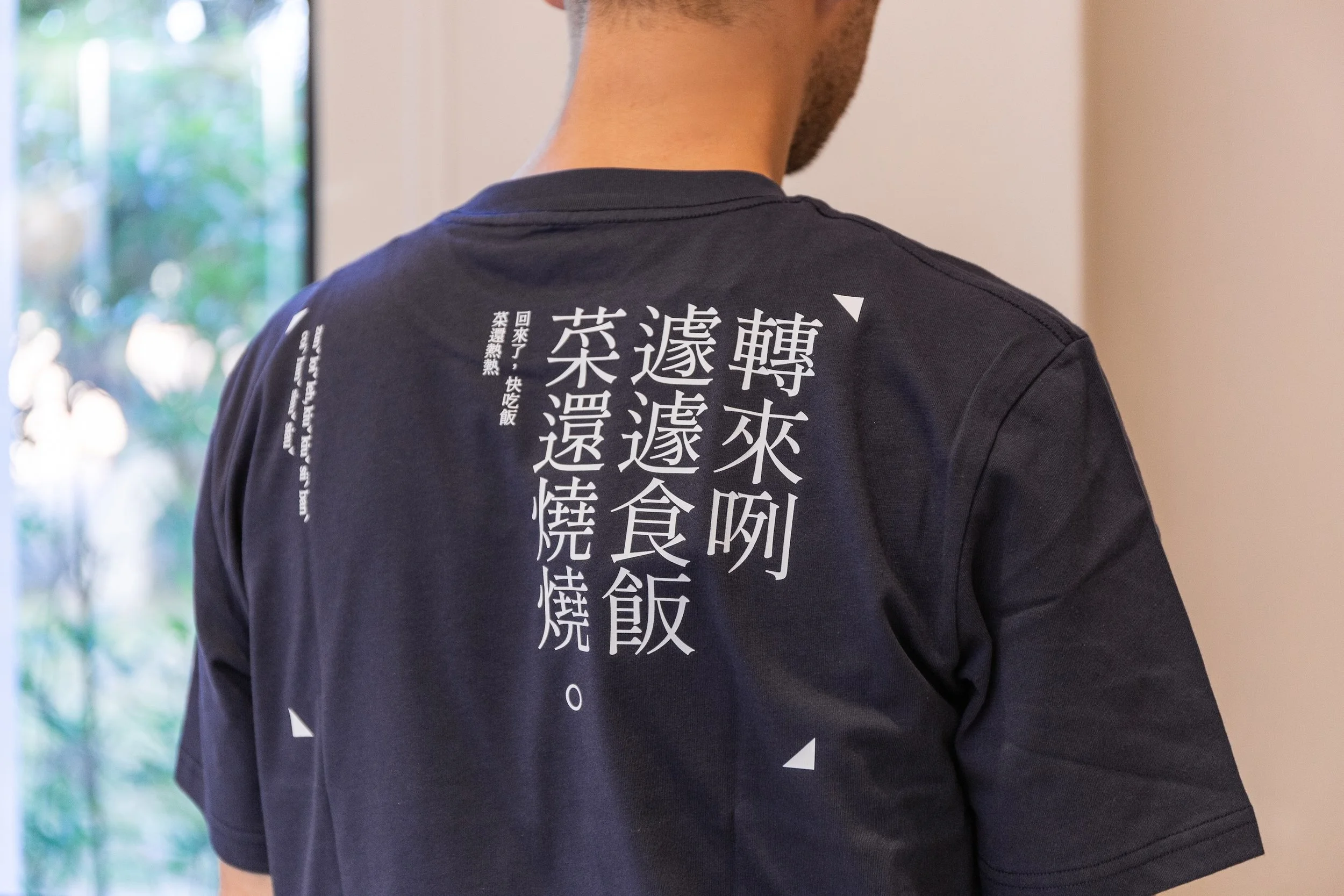
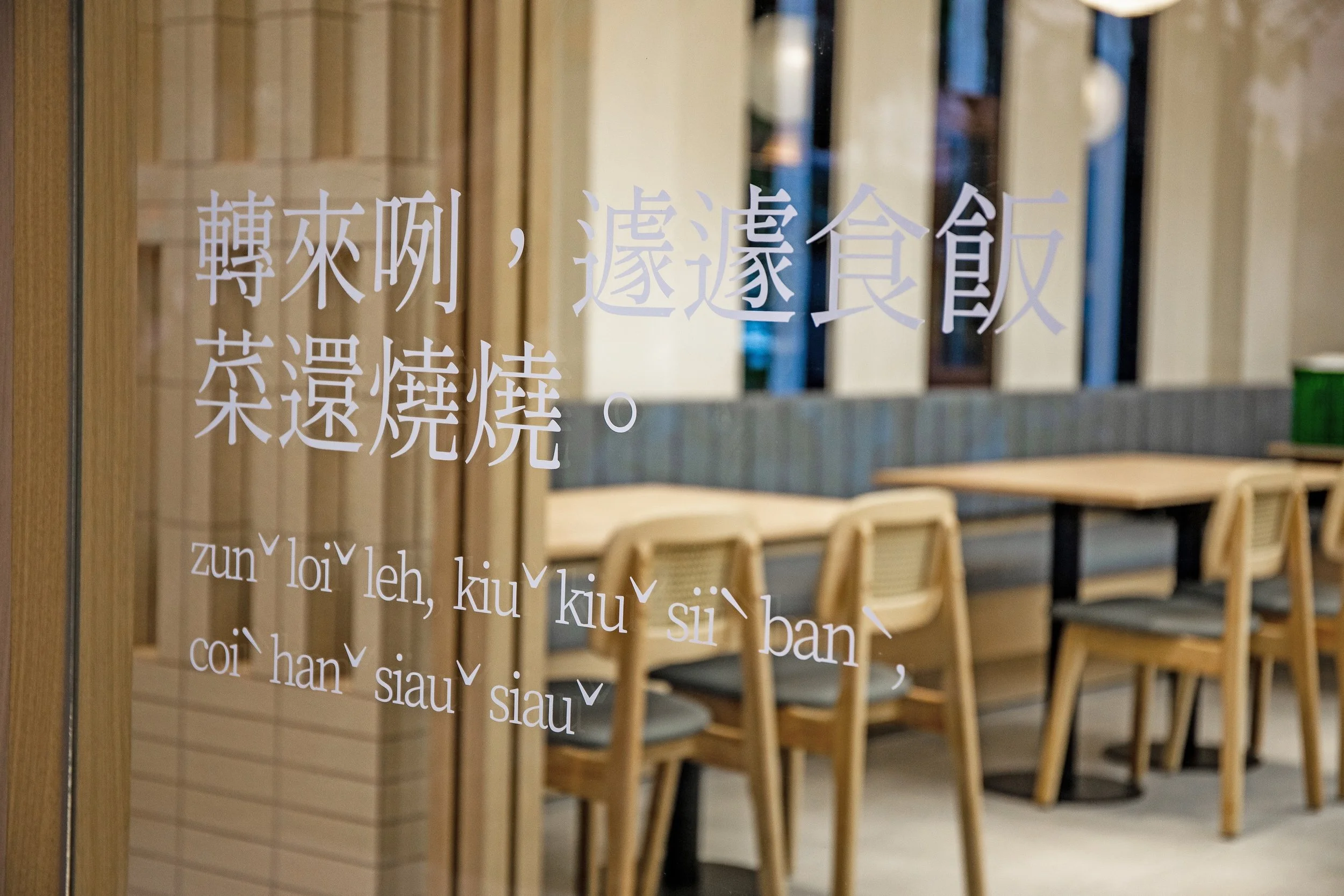
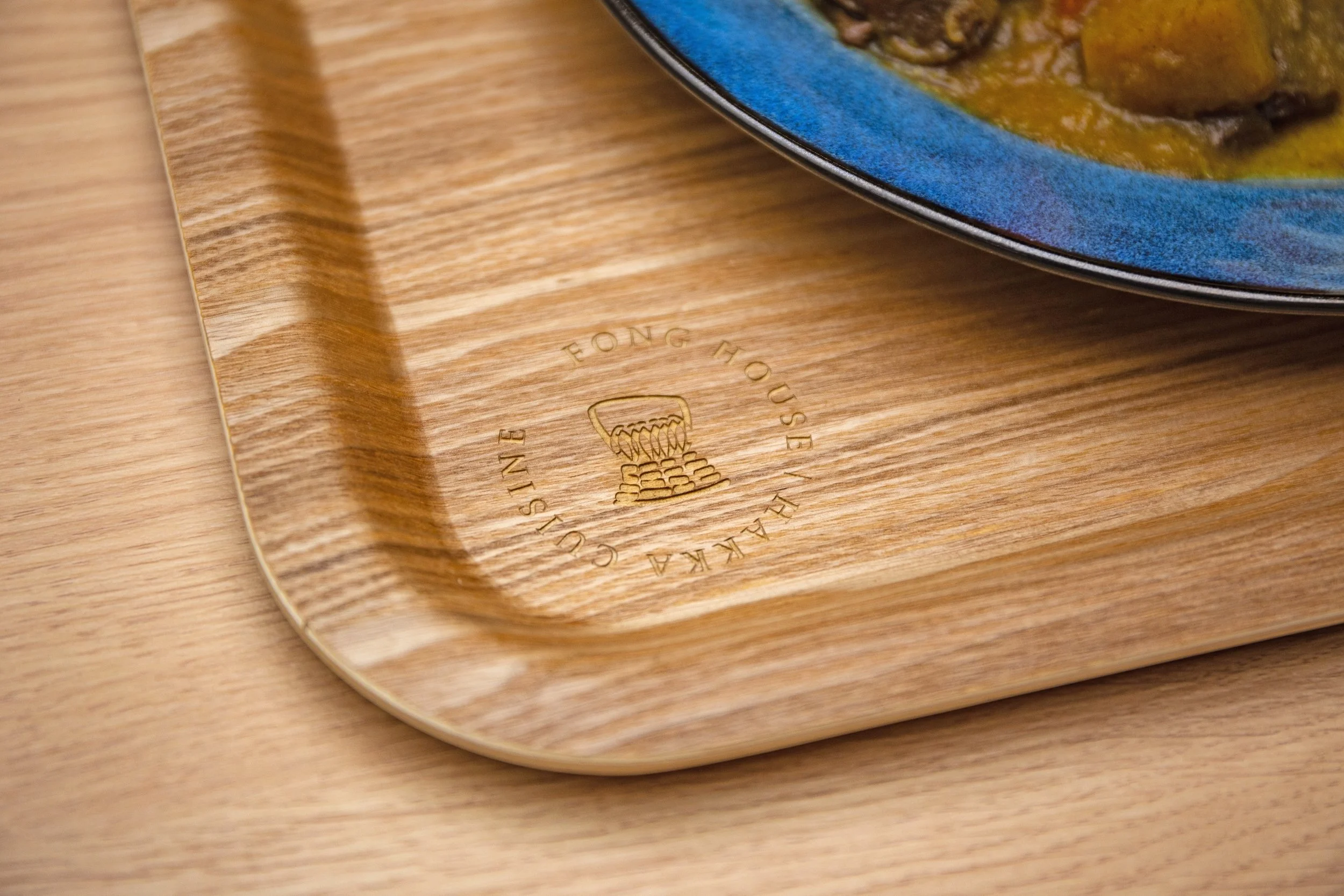
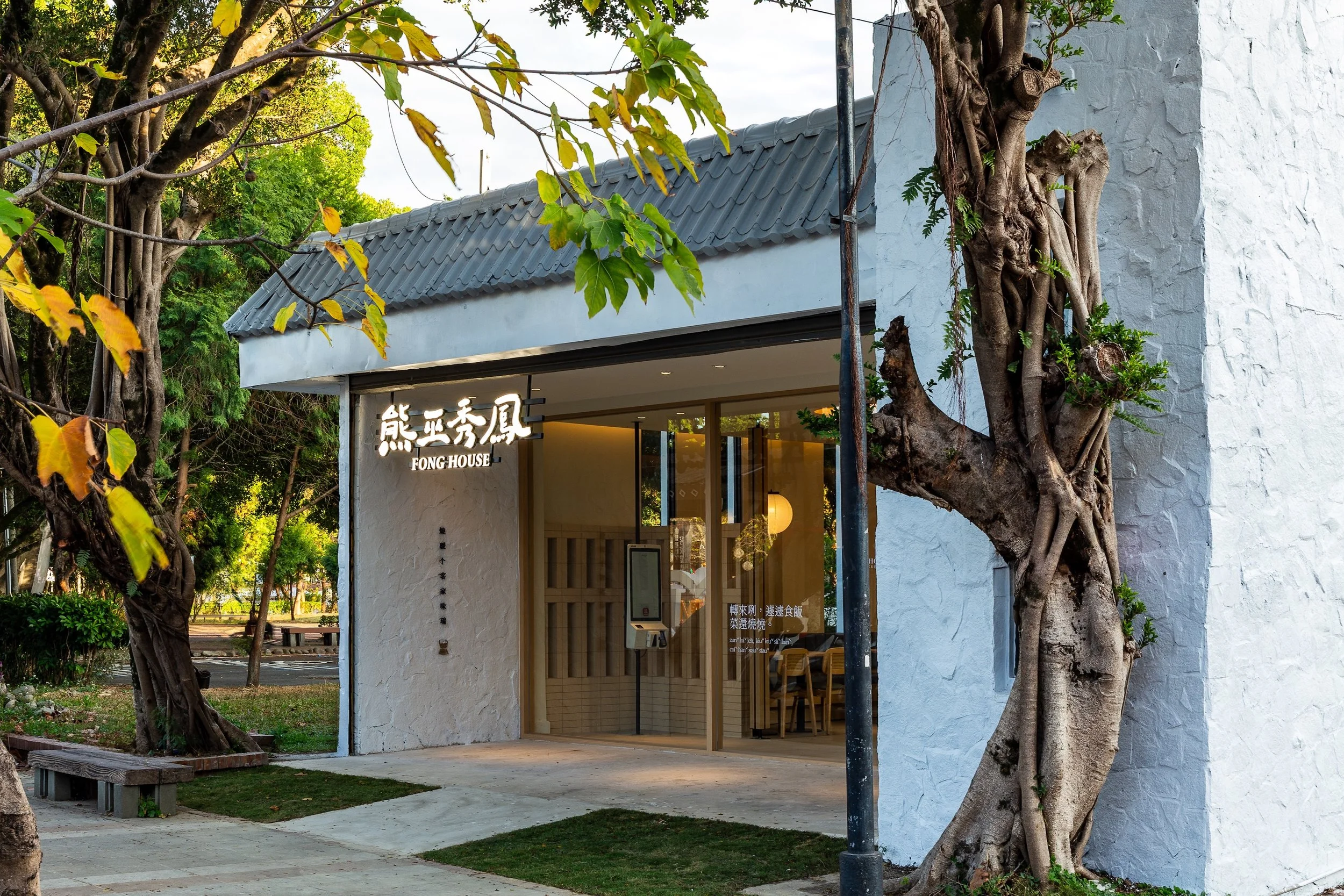
品牌以外婆之名,延伸成全新餐廳「熊巫秀鳳」,希望重新詮釋客家料理,滿足東豐鐵馬道旅人與在地居民的味蕾。而「火囪」意象為概念核心,傳統客家暖爐也是外婆無言關懷的象徵,如同她常說的:「轉來咧,遽遽食飯,菜還燒燒。」透過店內親切的客家語、充滿情懷的料理香與火囪藤編意象的呈現,我們紀念熊巫秀鳳,也將她的溫暖與親切化作品牌精神,迎接每一位來訪的客人,讓人感受到家的滋味與歸屬感。
Named after the founder’s grandmother, the brand has evolved into a new restaurant, “Hsiung Wu Hsiu Fong,” reimagining Hakka cuisine to delight both travelers along the Dongfeng Bikeway and local residents alike.
The concept centers on the image of the “fire stove” (Huo Cong) — a traditional Hakka hearth and a silent symbol of the grandmother’s care and devotion. As she often said in Hakka, “You’re back—come eat quickly, the food is still hot.”
Through the warm use of the Hakka language in the restaurant, the nostalgic aromas of home-style cooking, and the woven rattan imagery inspired by the hearth, we honor Hsiung Wu Hsiu-Feng and transform her kindness and warmth into the spirit of the brand. We welcome every guest with the taste of home and a deep sense of belonging.



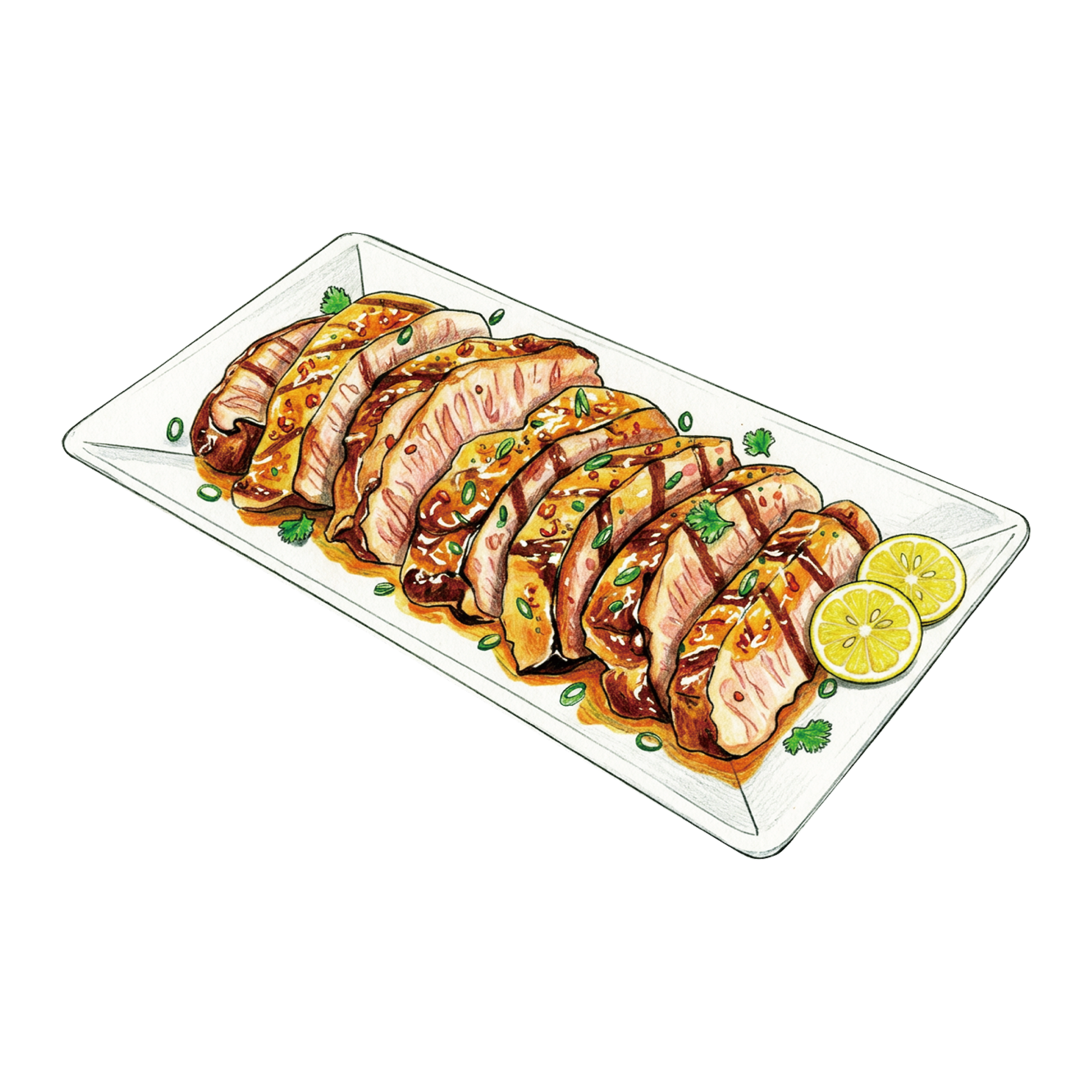
菜單設計以手繪插畫呈現,線條溫潤質樸,傳遞客家文化的踏實與溫度。透過細膩筆觸與自然構圖,讓用餐者在閱讀之間感受土地情感與家的親切滋味。
The menu design features hand-drawn illustrations with warm, simple lines, conveying the sincerity and warmth of Hakka culture. Through delicate brushstrokes and natural compositions, diners can feel a connection to the land and the comforting, familiar taste of home as they read the menu.

傳統意象與現代空間語彙的轉化
From Tradition
to Modern Space
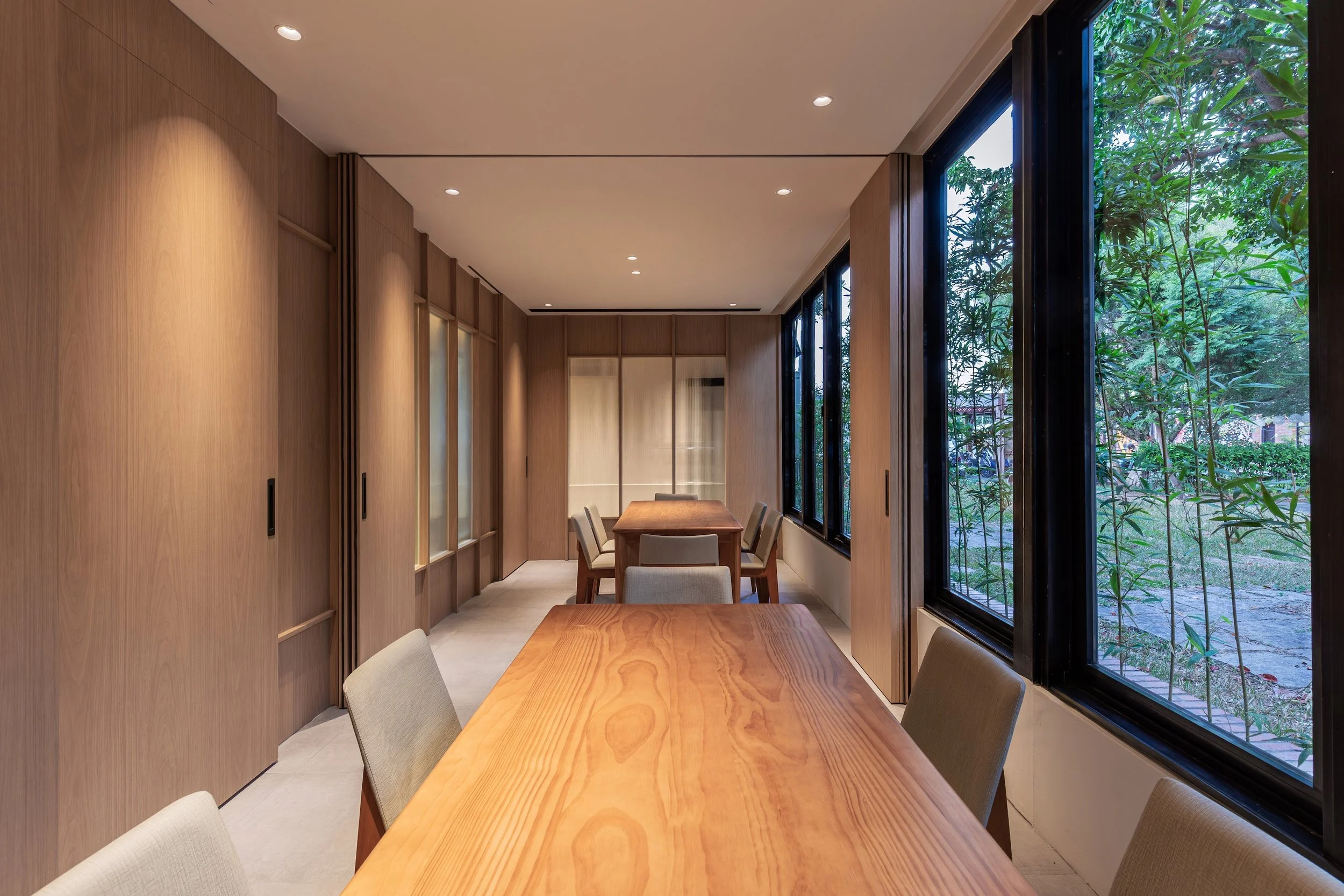
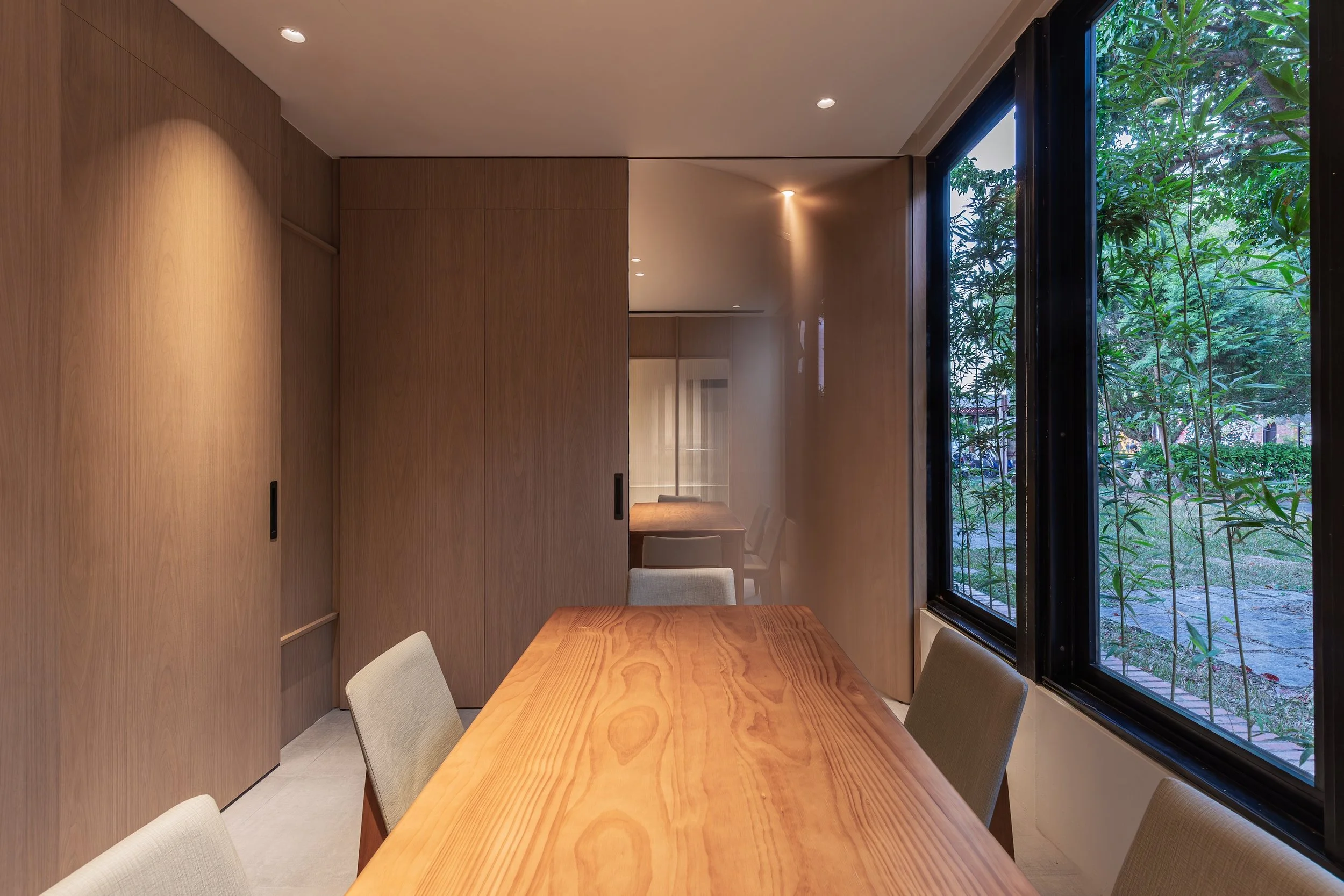
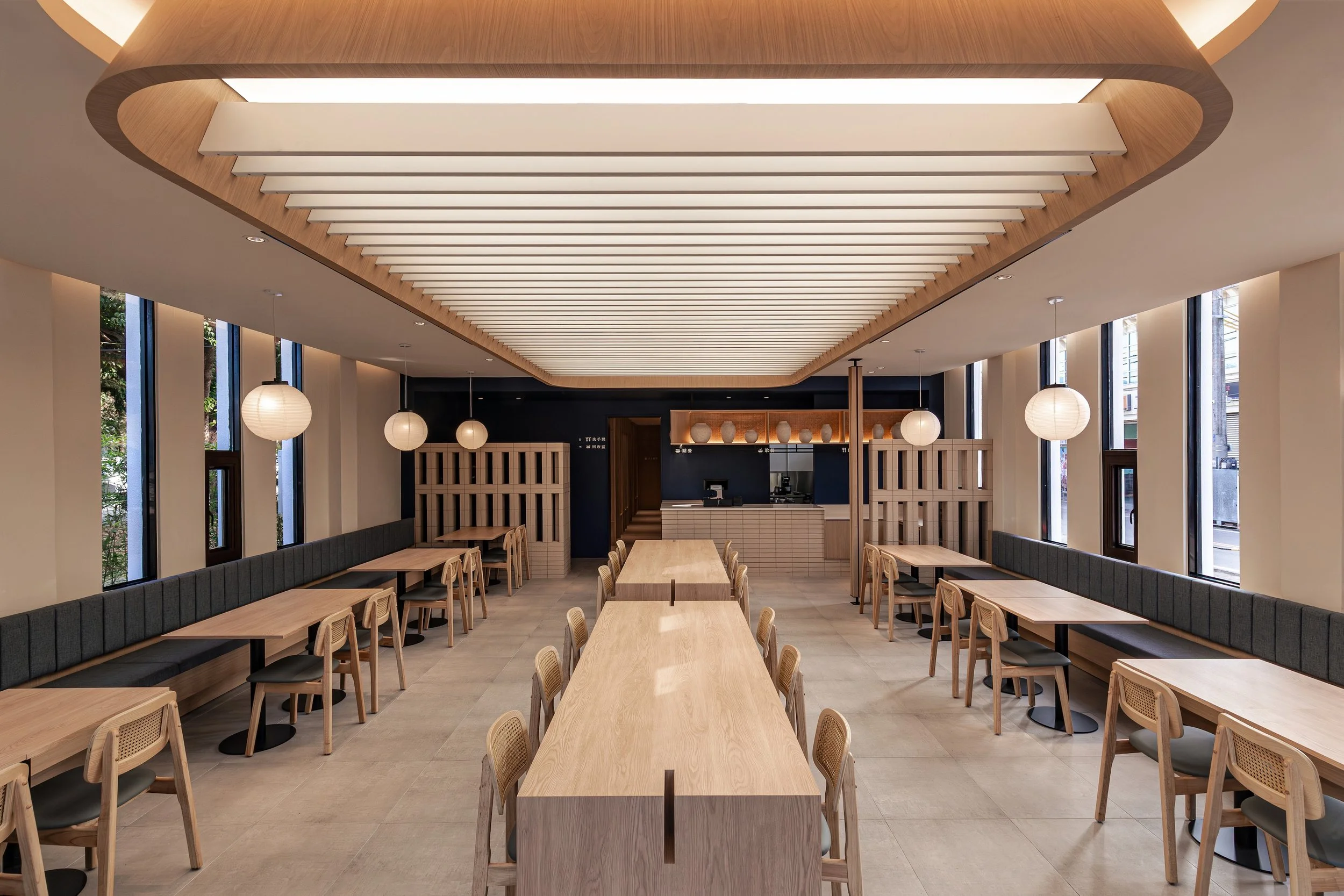
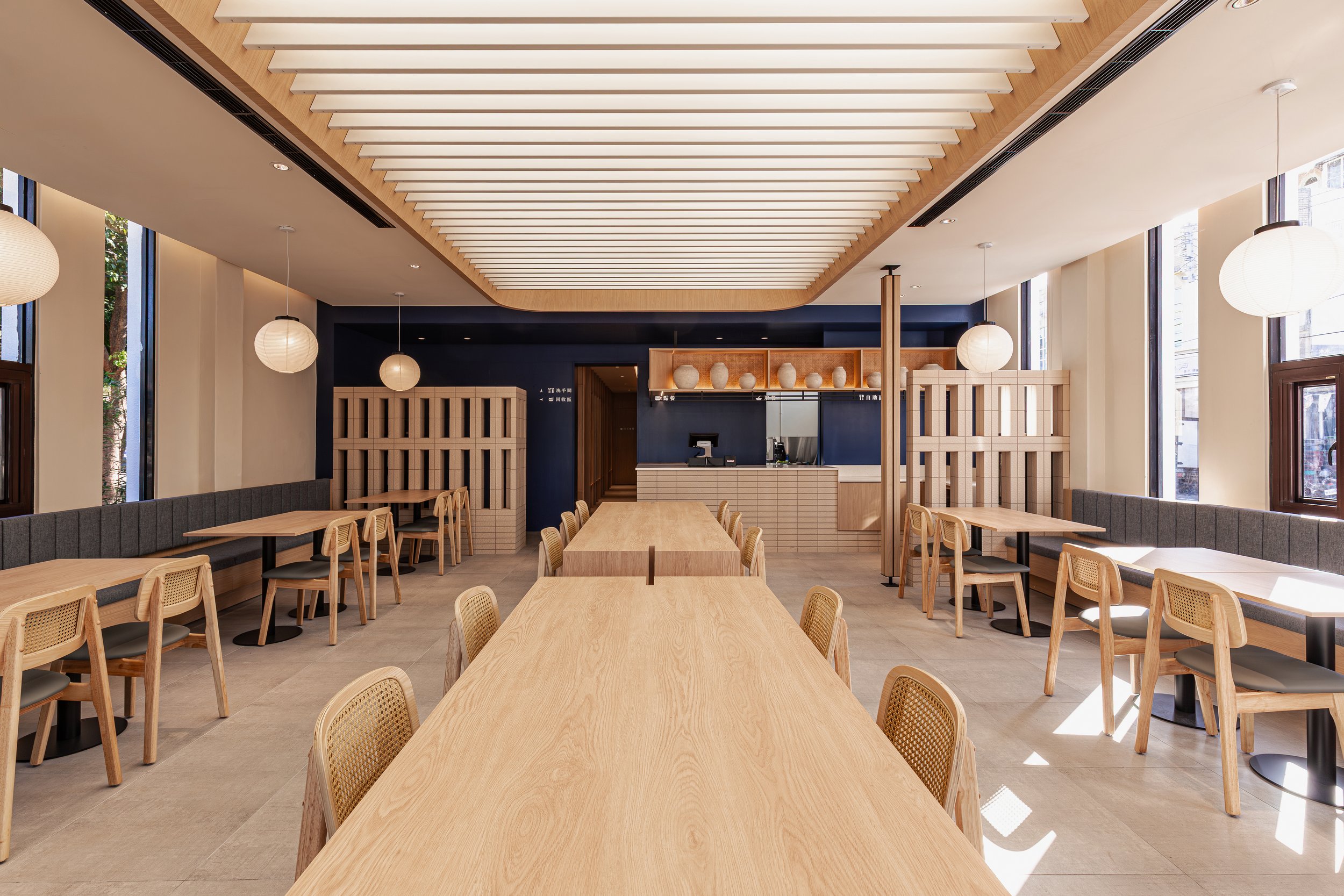
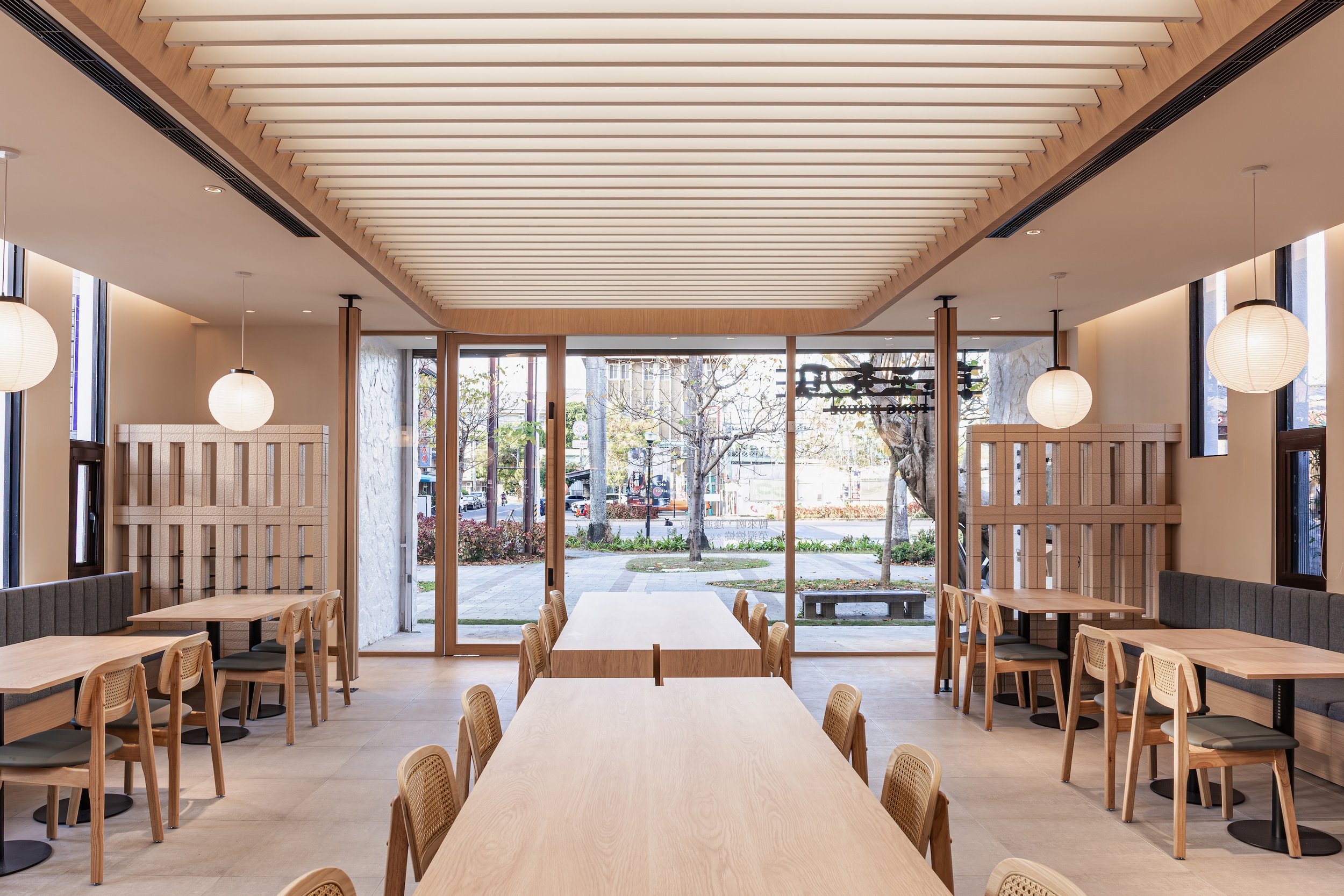
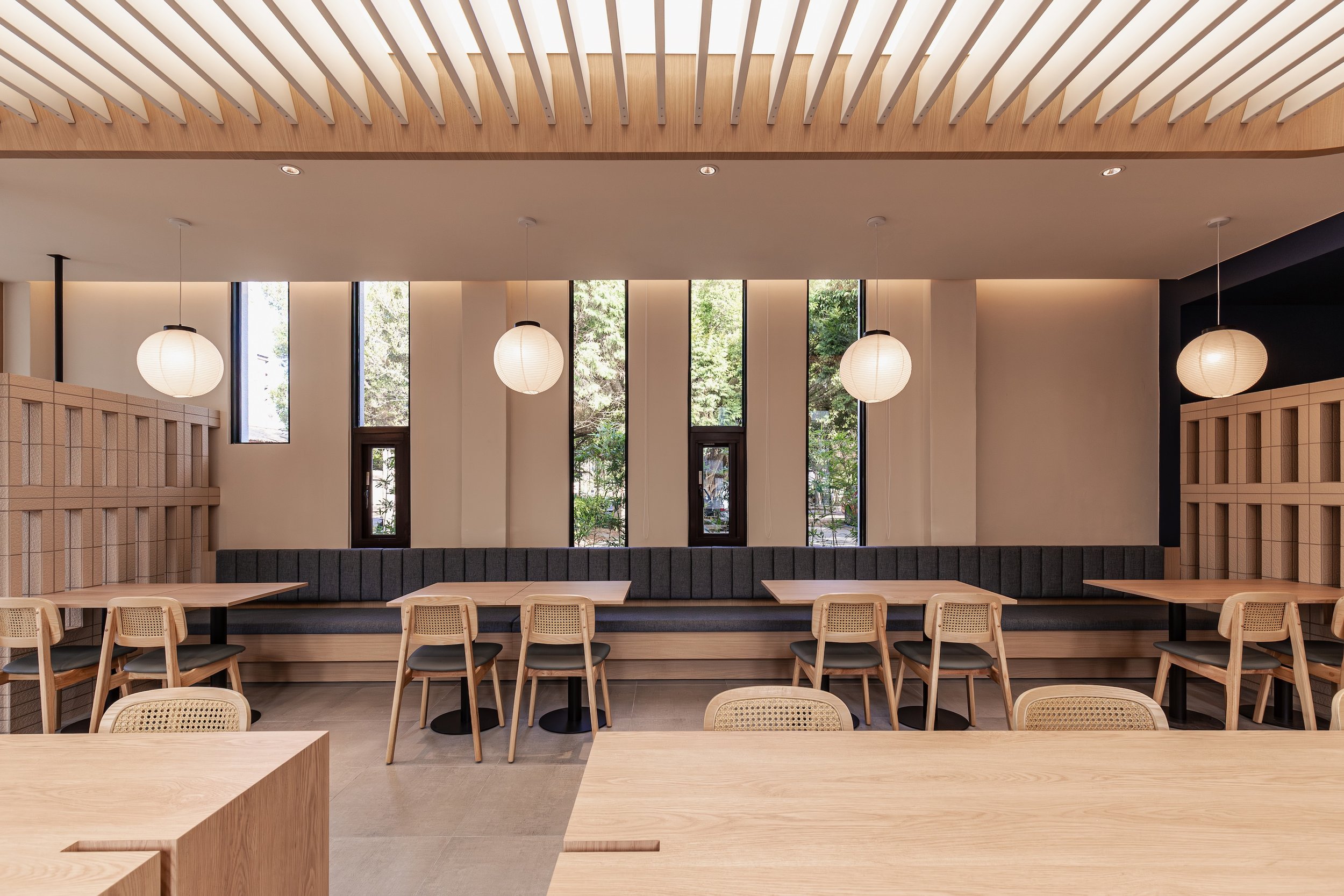
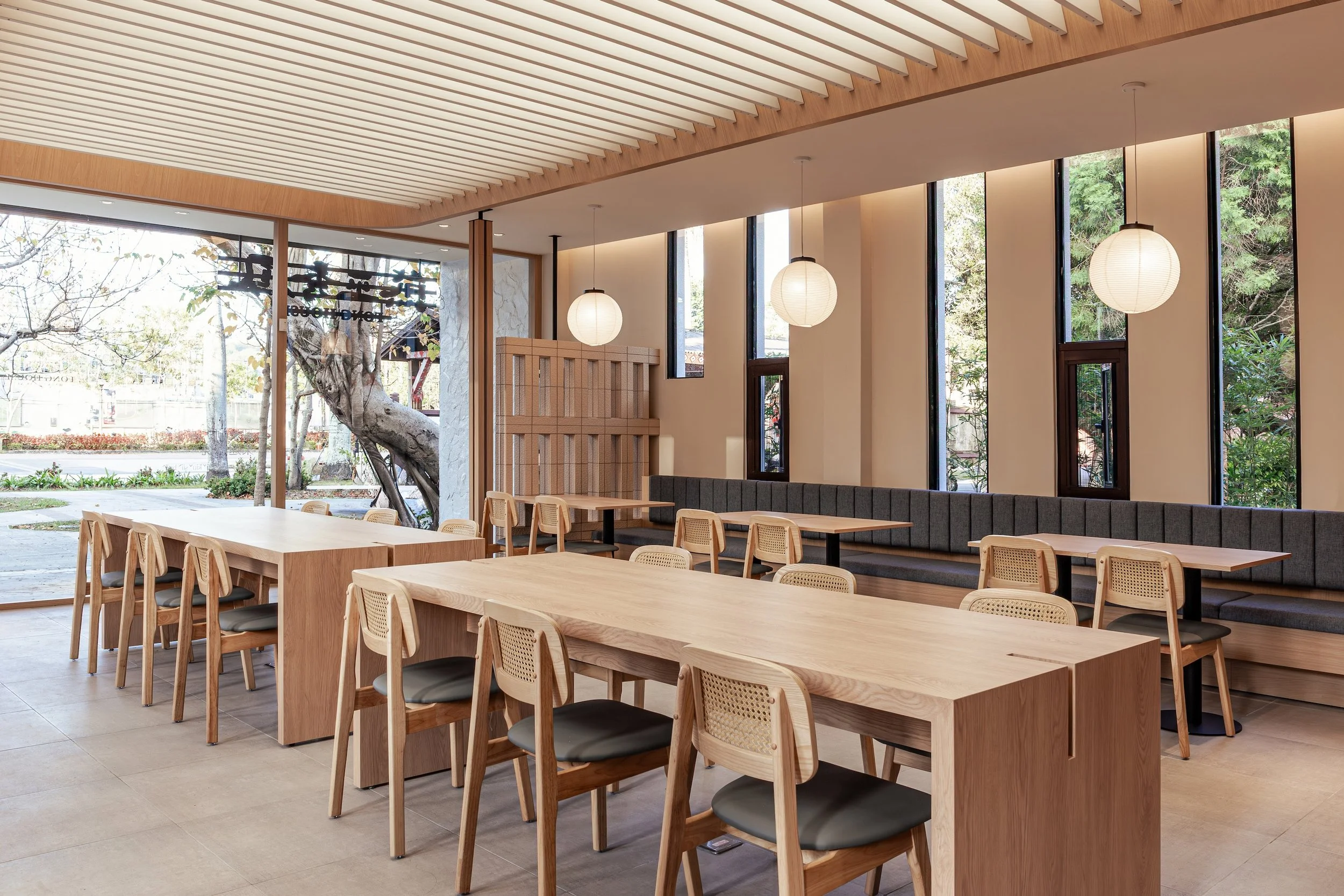
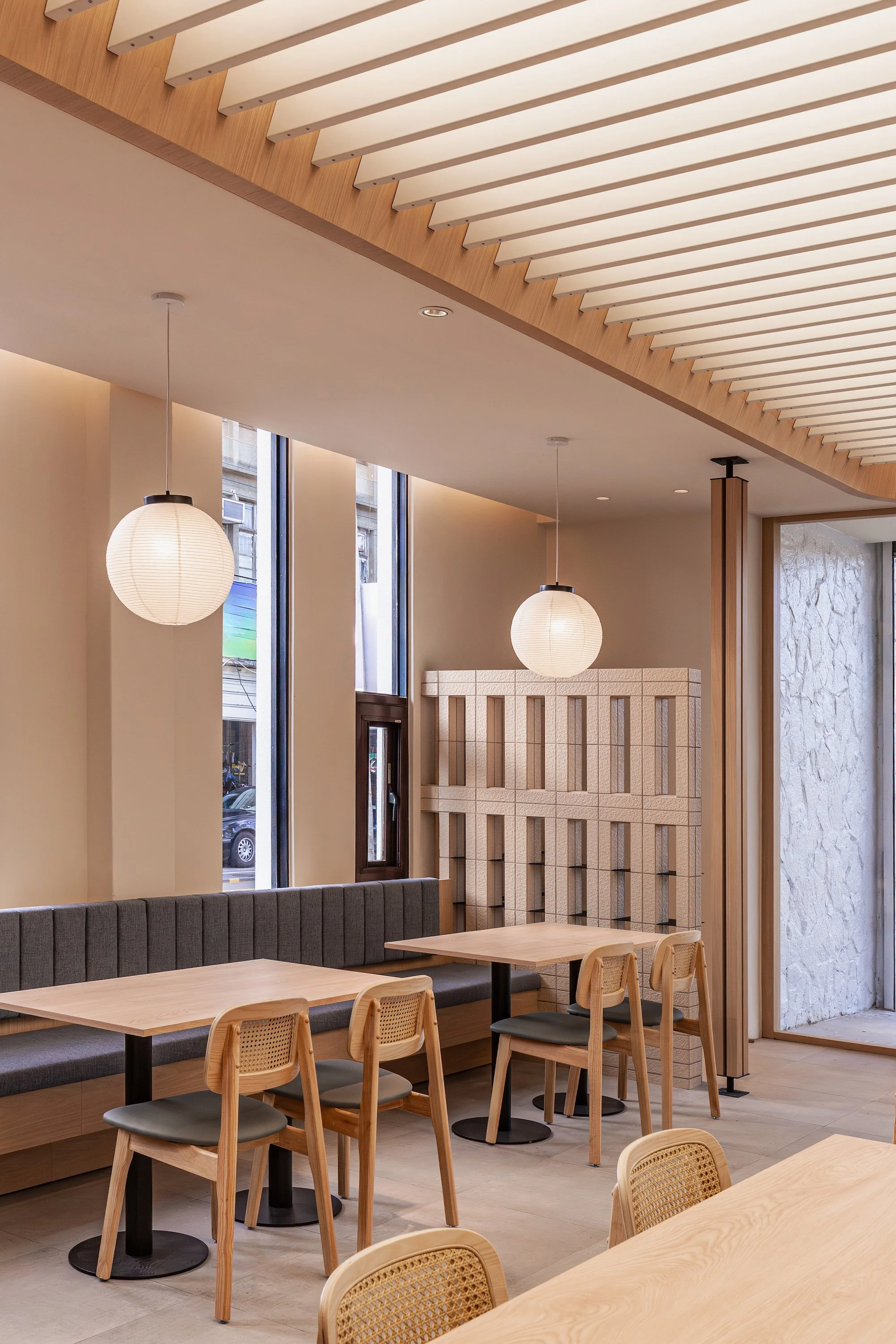
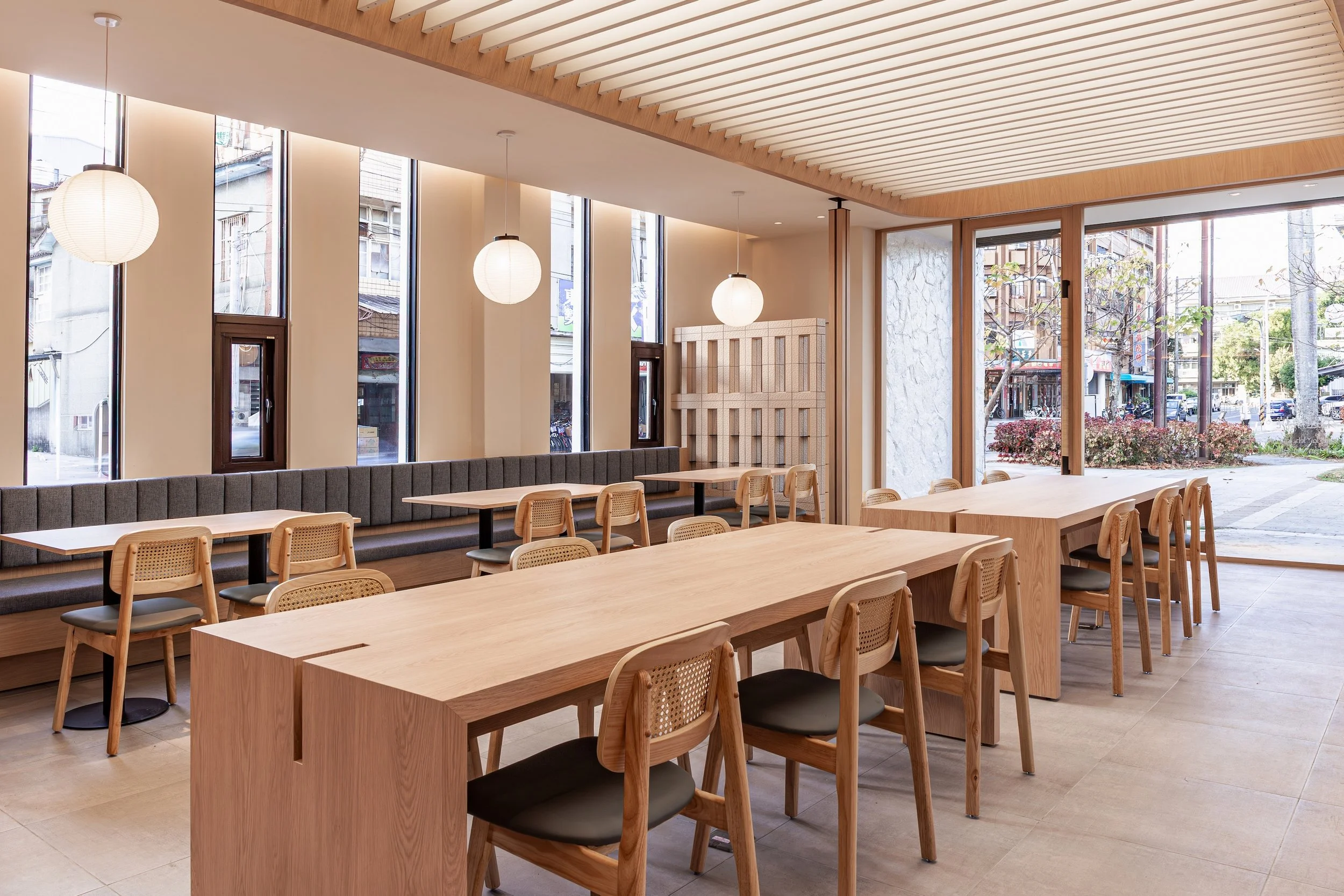
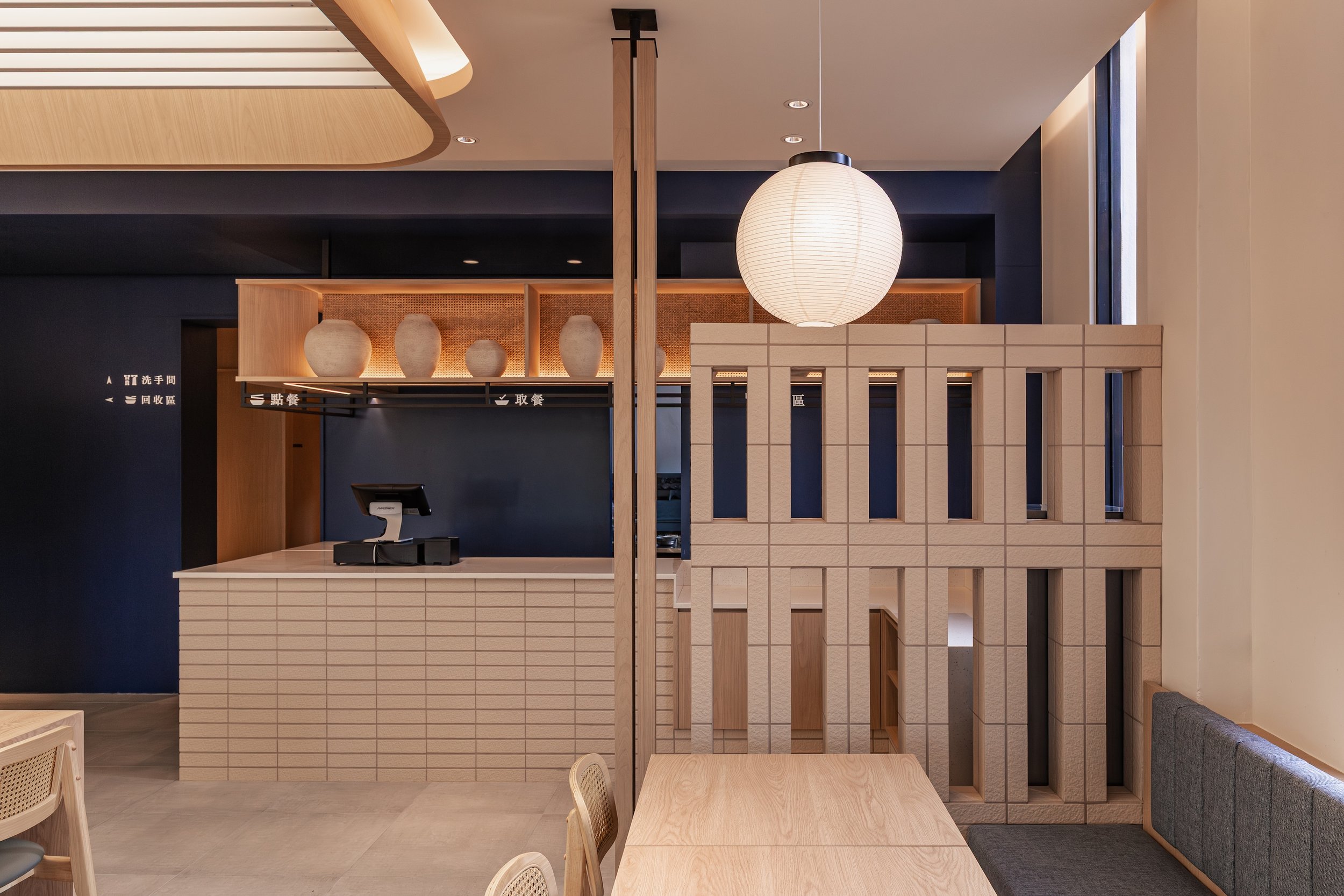
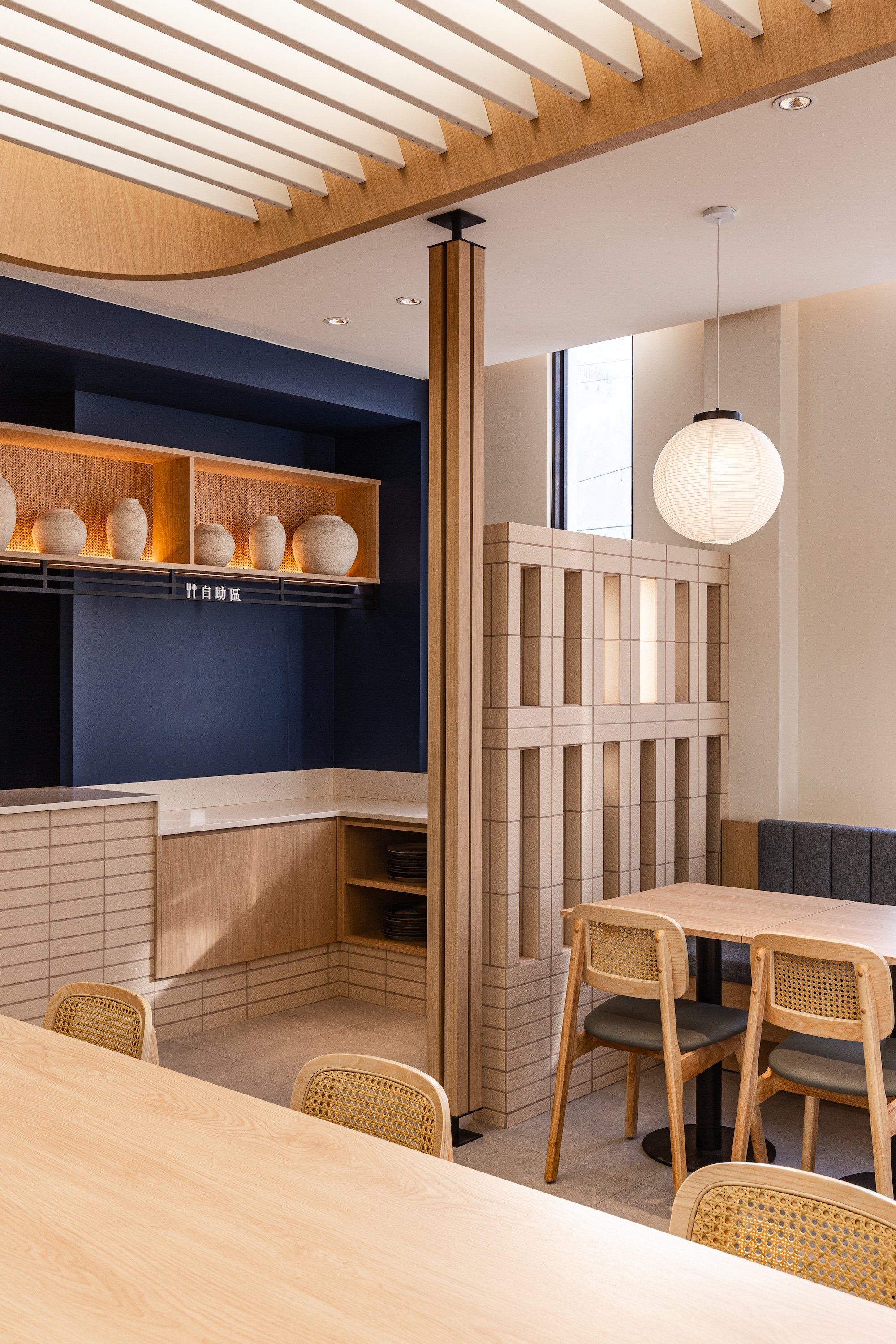
以客家文化中用於取暖的竹製提籃「火囪」為設計核心,將傳統暖爐意象轉化為現代空間語彙。空間中軸處配置一座長達 6.5 米的大型圓弧天花燈具,內部採用光膜模擬自然天光,呼應火囪散發的柔和熱能;外層則覆蓋橫向格柵,藉由遮蔽直射光以消除眩光。這座巨型裝置透過格柵縫隙使光影溢散,讓整座結構具備如呼吸般的視覺動態,如同火囪持續傳遞溫度;在提升視覺舒適度的同時,亦透過線性延伸強化空間縱深,將傳統智慧落實於當代機能美學之中。
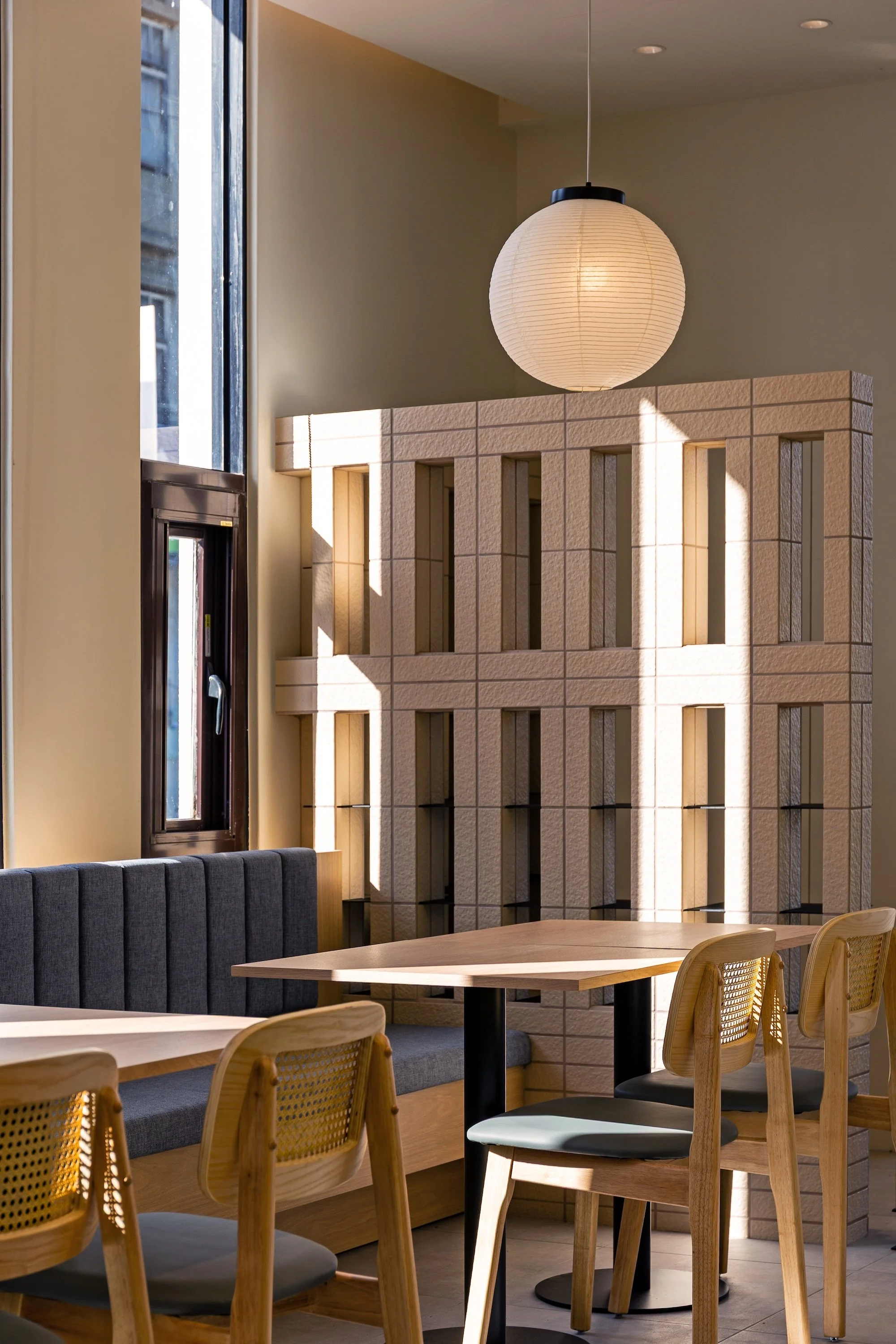
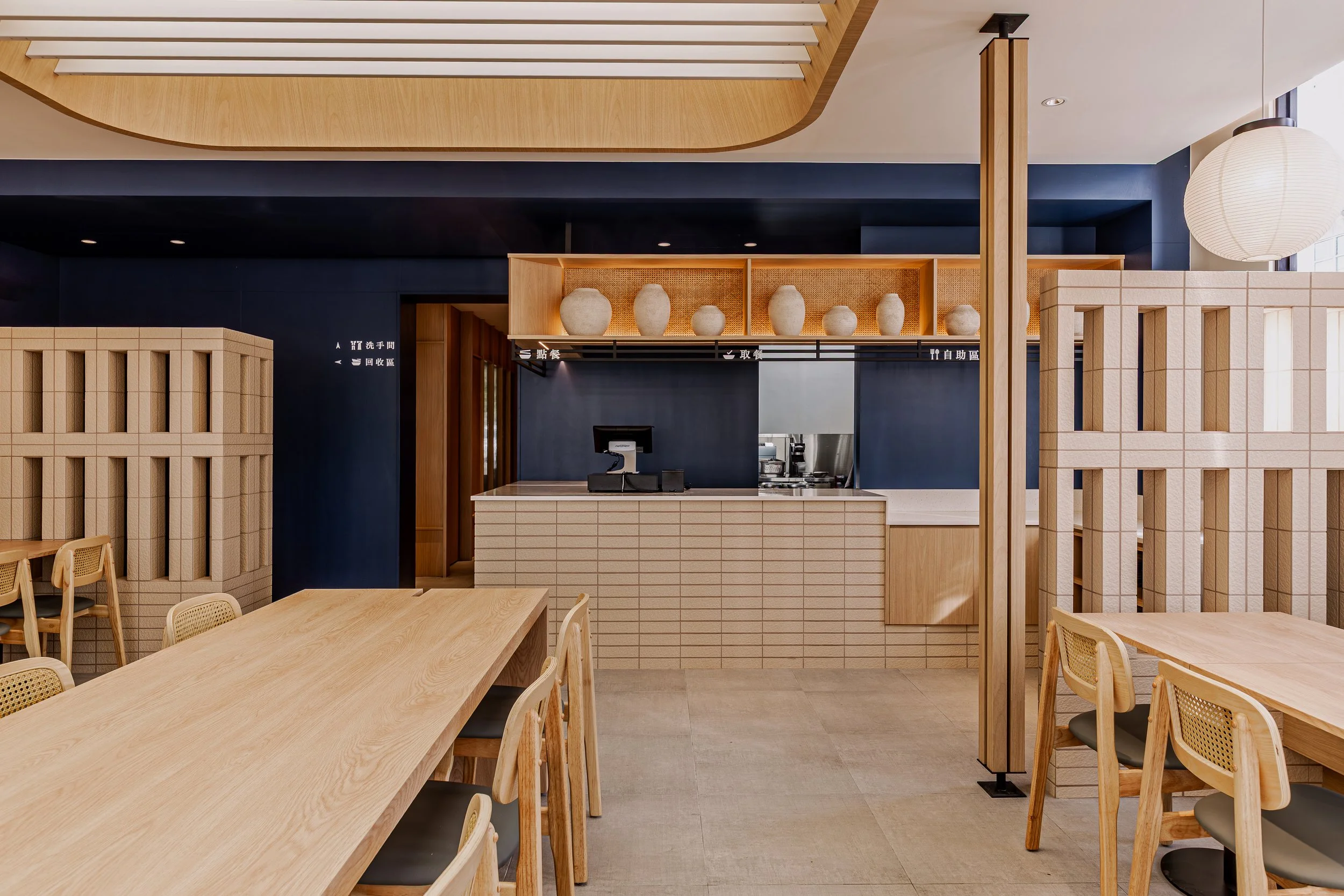
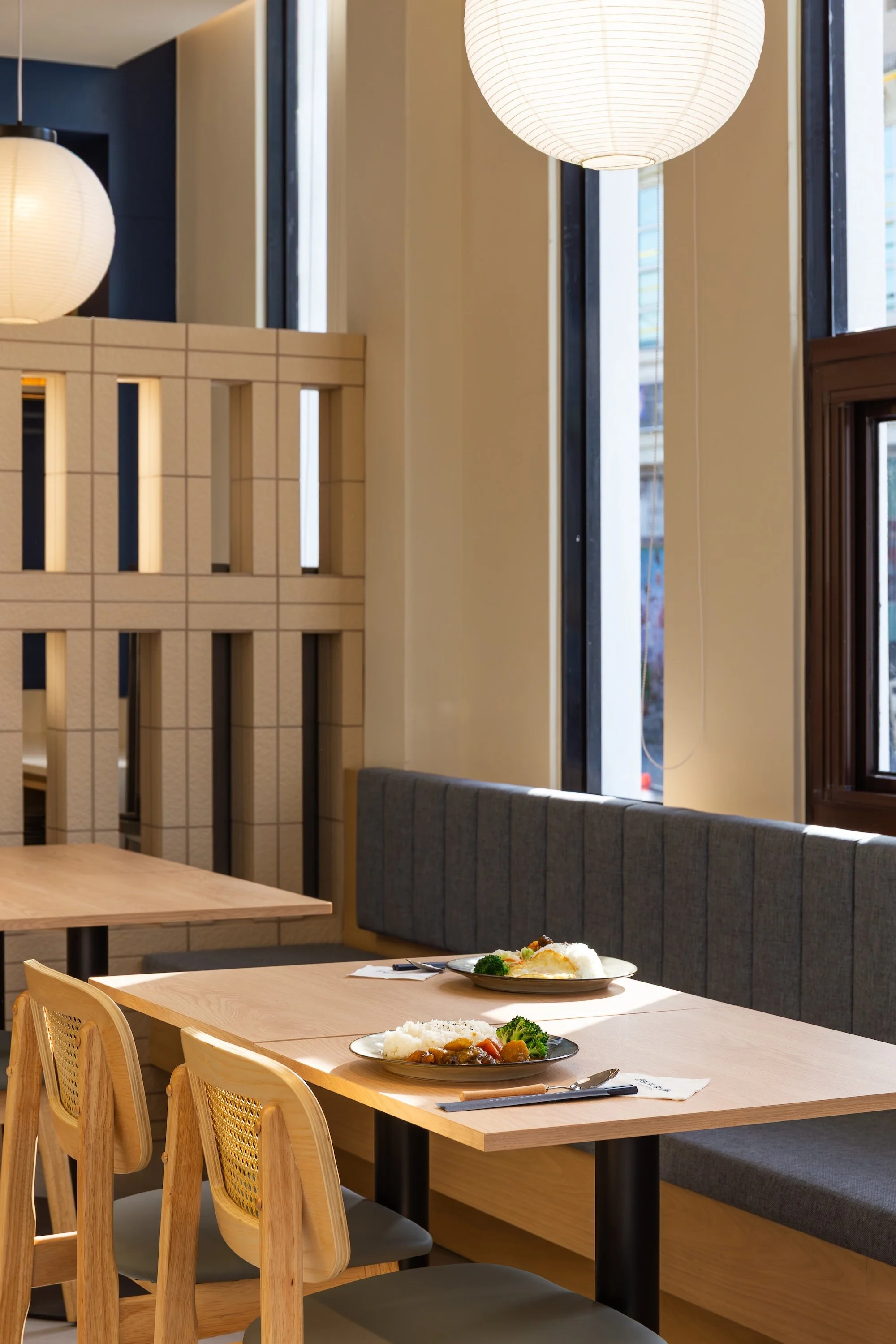
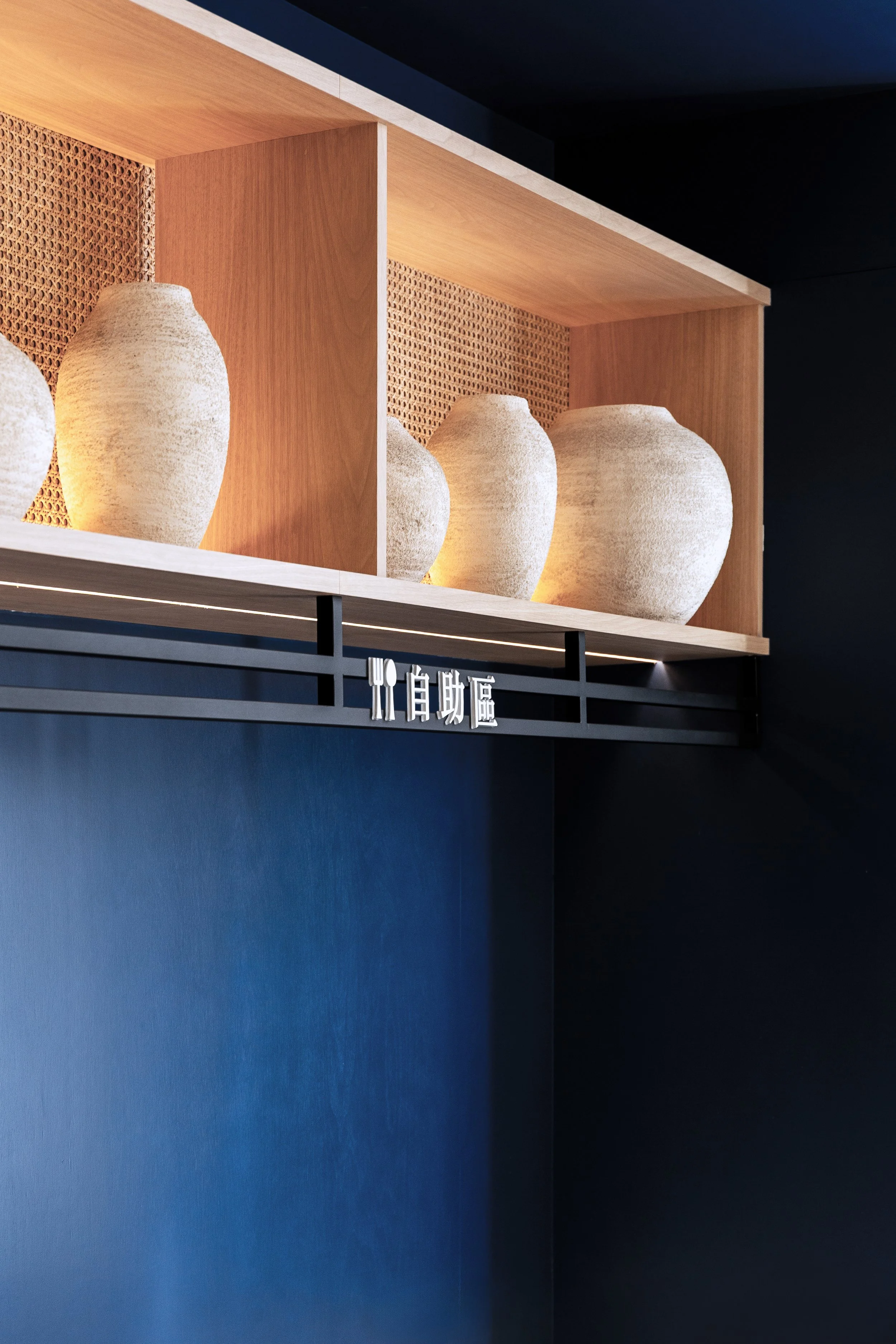
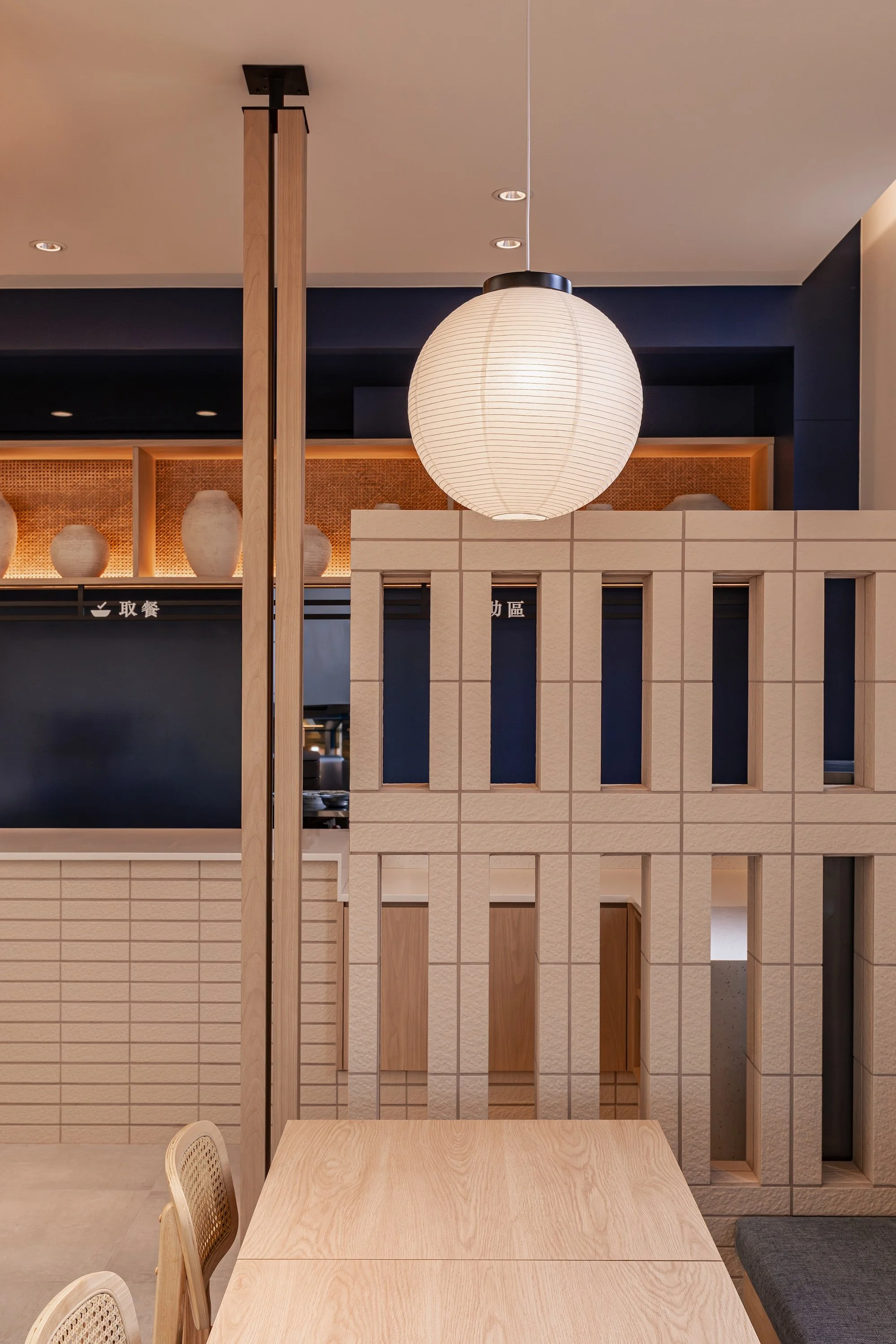
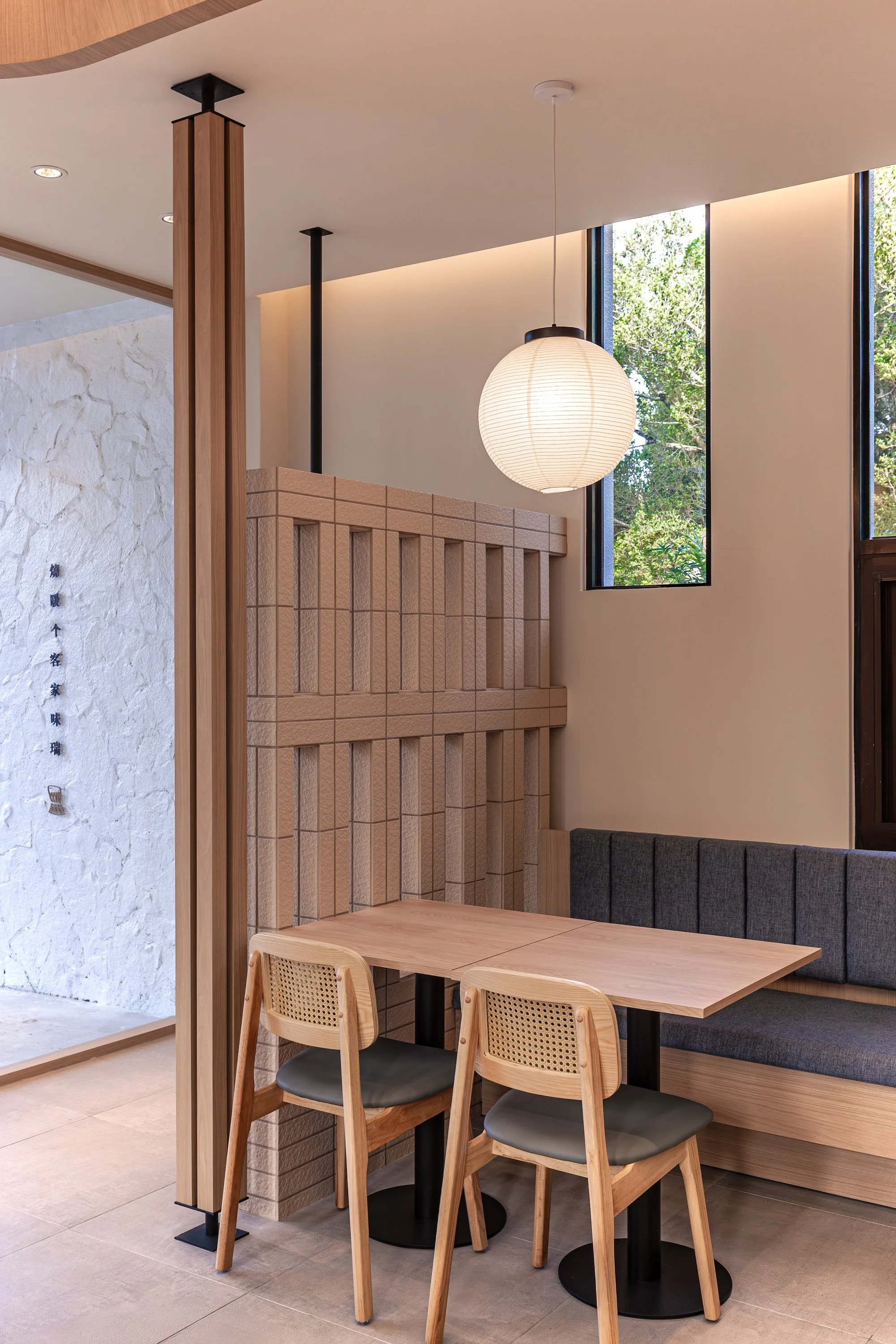
立面色彩計畫選用源自客家「藍染」工藝的深靛色為主調,象徵客家族群沉穩內斂的性格。家具與裝飾融入大量藤編元素,致敬客家常民生活中的編織手工藝,利用藤材柔韌的質地,將傳統火囪的編織結構巧妙轉化為場域裝飾。整體空間設計強烈呼應了客家的文化底蘊與生活哲學,透過現代設計手法的轉譯,將原本屬於家庭私領域的溫暖延伸至公共用餐環境。
Centered on the “Huo Cong,” a traditional bamboo basket used for warmth in Hakka culture, the design transforms the imagery of the traditional hearth into a contemporary spatial language. At the central axis of the space stands a large-scale, curved ceiling installation measuring 6.5 meters in length. Its interior light membrane simulates natural daylight, echoing the gentle heat once emitted by the Huo Cong, while the exterior is wrapped in horizontal louvers that shield direct light and eliminate glare.
Light and shadow diffuse softly through the gaps between the louvers, giving the structure a breathing-like visual rhythm, as if continuously radiating warmth like the traditional hearth. Beyond enhancing visual comfort, the linear extension of the installation also reinforces the depth of the space, translating traditional wisdom into modern functional aesthetics.
The façade color scheme features deep indigo inspired by traditional Hakka blue-dyeing craftsmanship, symbolizing the calm and reserved character of the Hakka people. Furniture and decorative elements incorporate extensive rattan weaving, paying tribute to everyday Hakka handicrafts. The flexible texture of rattan cleverly reinterprets the woven structure of the Huo Cong as spatial ornamentation.
Overall, the design strongly reflects the cultural foundation and philosophy of Hakka life. Through contemporary design techniques, it extends the warmth once found in private domestic spaces into a shared public dining environment.
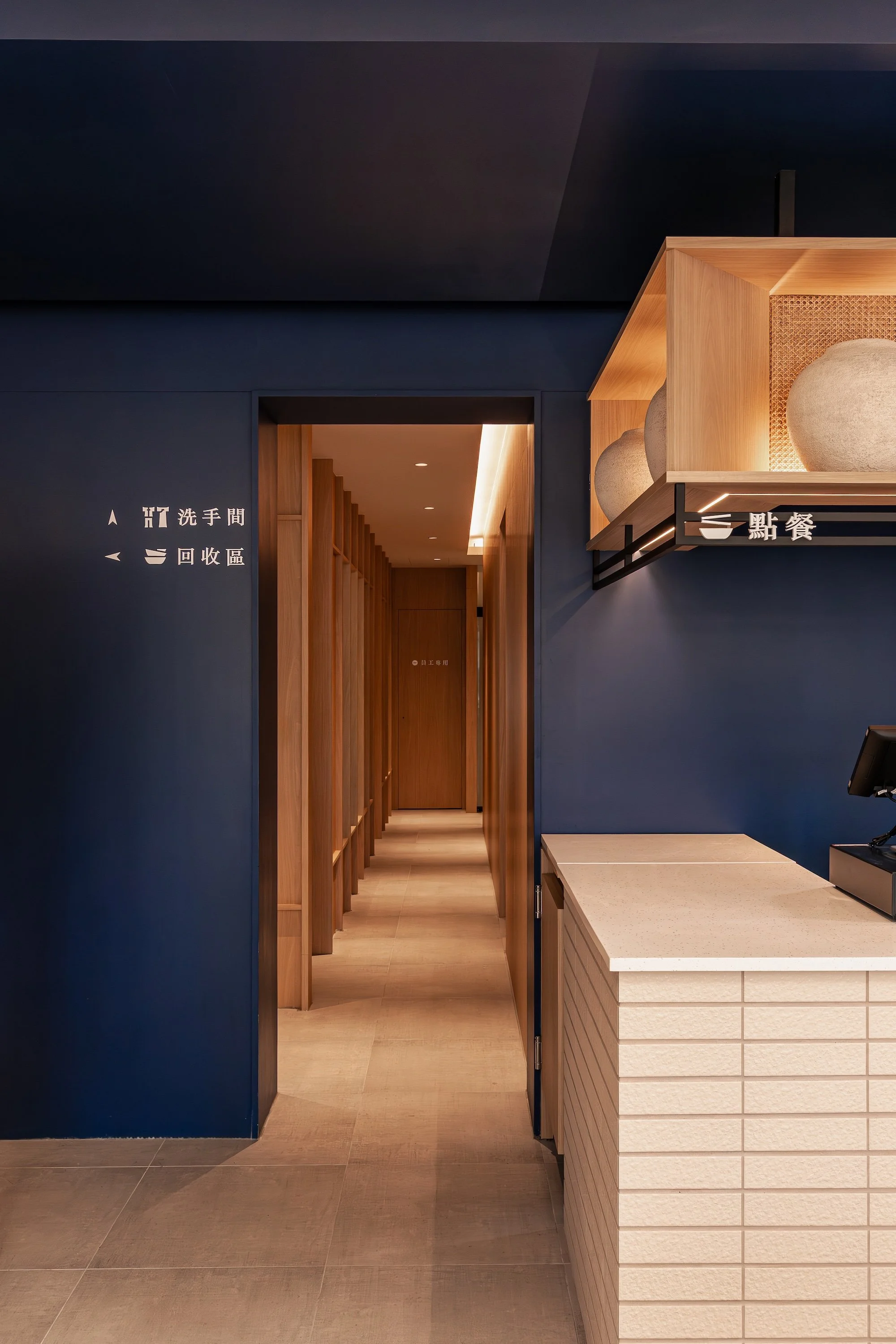
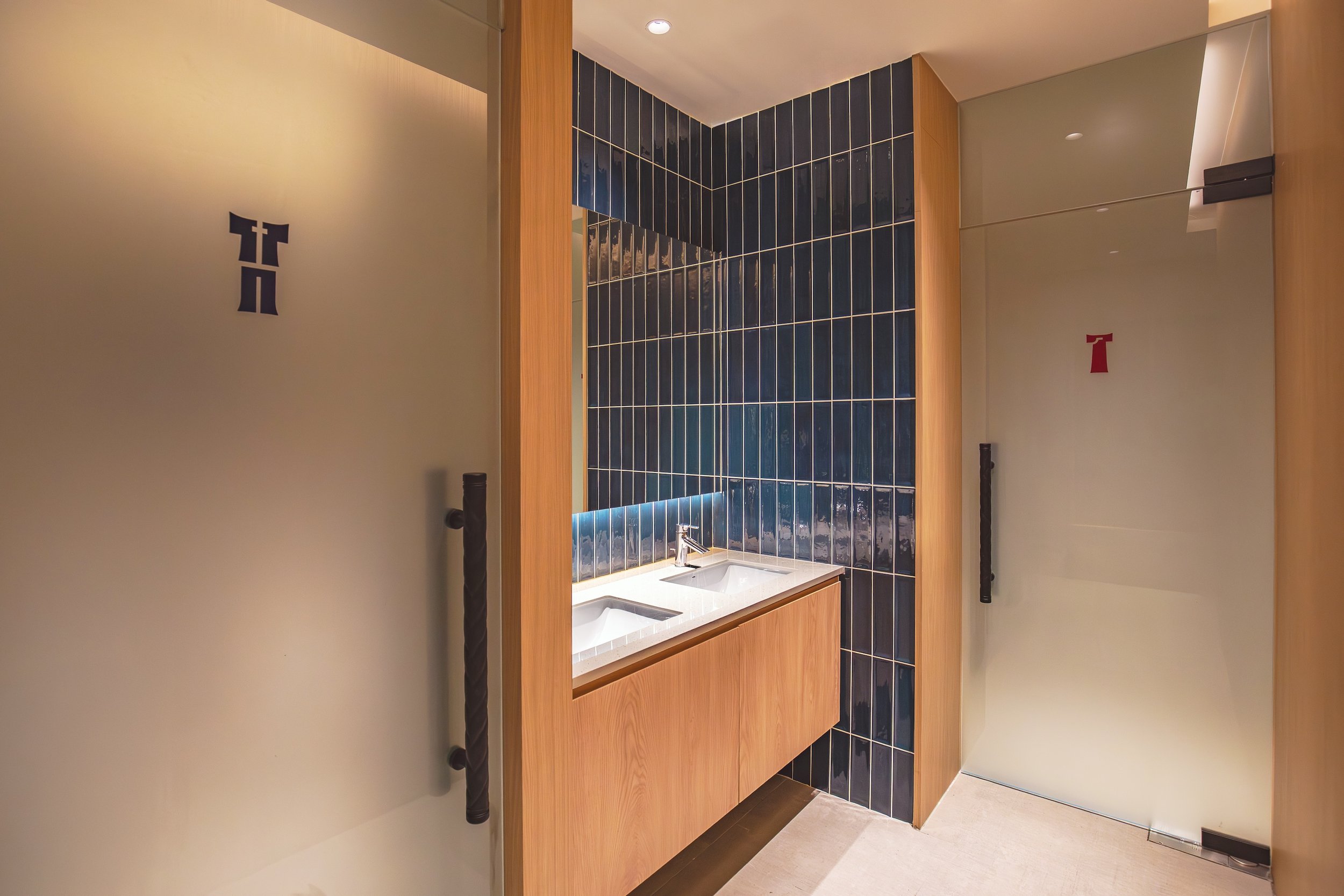


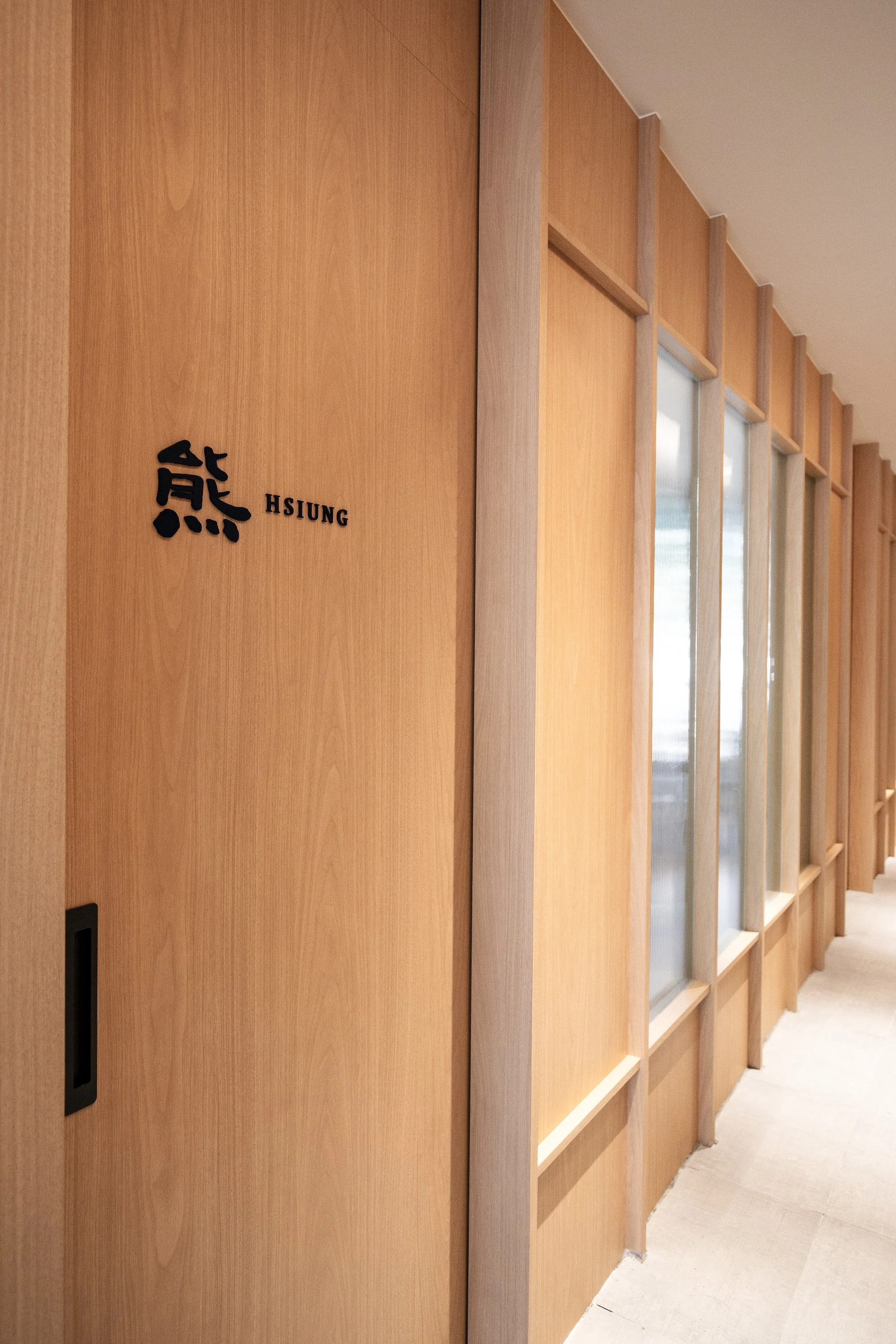
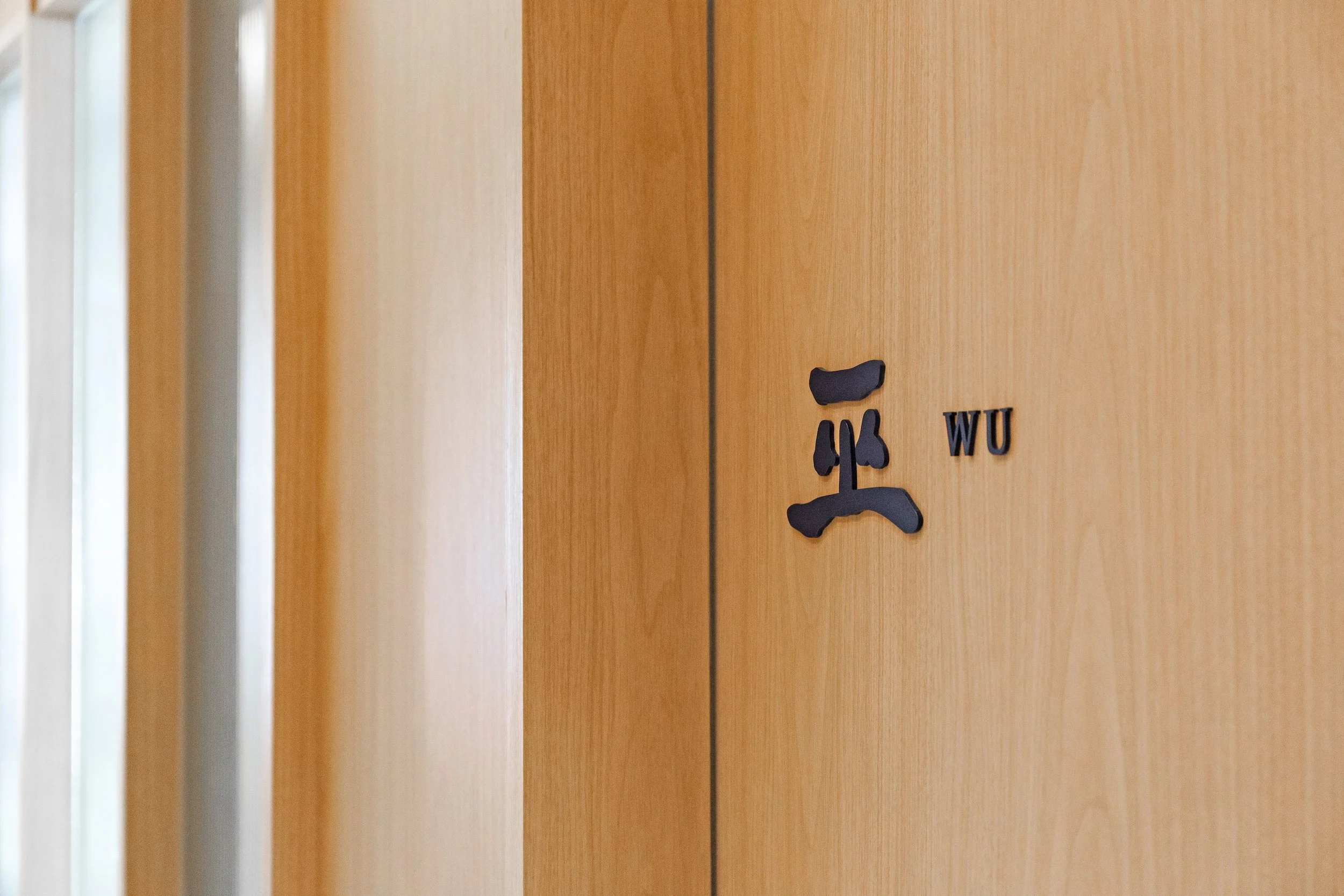
洗手間標誌以傳統客家農業社會的服飾為靈感,將人物輪廓與服裝特徵簡化為現代圖像語彙,不僅保有實用機能,也讓文化記憶在日常動線中自然被看見與感受。
The restroom signage is inspired by traditional attire from Hakka agricultural society, simplifying human figures and clothing details into a modern visual language. Subtly integrated into the spatial details, the design serves both practical wayfinding needs and allows cultural memory to be naturally seen and felt within everyday movement through the space.